


Why marine policy is key to protecting Malta’s bottlenose dolphins –
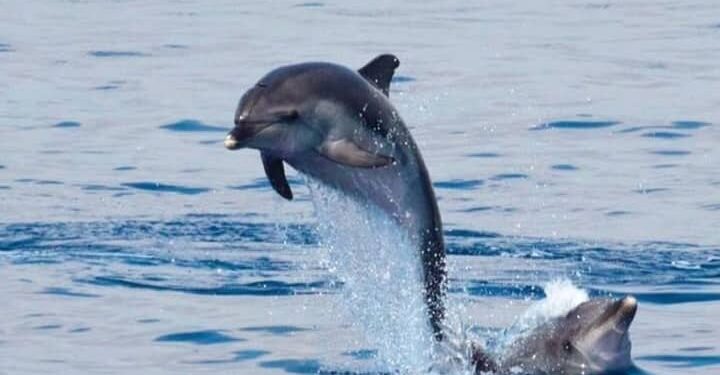
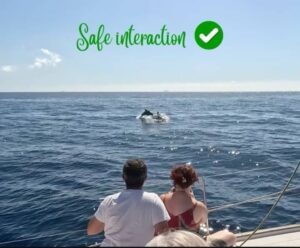
Every year, Malta’s crystal-clear waters attract thousands of visitors eager to enjoy the country’s rich marine environment. However, the same waters are also home to one of the Mediterranean’s most charismatic marine mammals the bottlenose dolphin (Tursiops truncatus). As marine tourism continues to expand, so too do the challenges of balancing recreational activities with the protection of vulnerable wildlife.Recognizing this growing concern, 29 Maltese organizations, including private companies, NGOs, associations, researchers, and individuals, recently signed a joint statement under the #SeaWithRespect campaign, calling for urgent action to better protect Malta’s bottlenose dolphins.The campaign highlights increasing human disturbance in important dolphin habitats where recreational boats, jet skis, and speedboats are frequently observed approaching dolphins too closely, chasing them, and in some cases even feeding them. Many of these interactions occur within Natura 2000 protected areas, placing additional pressure on a dolphin population that is already vulnerable.
Although most visitors and recreational boat users do not intentionally harm marine wildlife, repeated disturbances can have serious ecological consequences. Interrupting dolphins while they are feeding, resting, or caring for their calves may alter their natural behaviour, increase stress levels, and reduce the ecological quality of their habitat. In many cases, these incidents result not from negligence, but from a lack of awareness about responsible behaviour around marine mammals.
This challenge highlights an important reality: awareness is only the beginning. Educational campaigns play a vital role in changing public attitudes, but awareness alone cannot guarantee long-term conservation without an effective governance framework to support it.Protecting marine biodiversity requires evidence-based policy making, clear legislation, institutional coordination, and effective enforcement. Sustainable marine tourism can only succeed when environmental protection is fully integrated into coastal management and blue economy strategies, ensuring that economic growth does not compromise ecosystem health.
Turning International Commitments into National Action
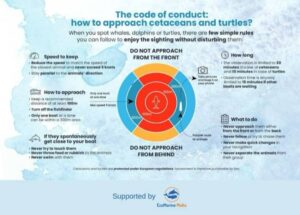
Rather than creating new conservation frameworks, the campaign’s signatories emphasize that the necessary guidance already exists. The challenge now lies in translating international commitments into practical action.The Agreement on the Conservation of Cetaceans of the Black Sea, Mediterranean Sea and Contiguous Atlantic Area (ACCOBAMS) provides Mediterranean countries with a comprehensive policy framework for protecting whales and dolphins. Its Code of Conduct establishes internationally recognized best practices for responsible wildlife watching, including recommended approach distances, vessel behaviour, and measures to minimise disturbance to cetaceans.However, according to the signatories, the effectiveness of the ACCOBAMS framework depends on its integration into national legislation and its transformation from guidance into enforceable policy. International agreements can only deliver meaningful conservation outcomes when their principles are reflected in domestic laws, supported by monitoring systems, and consistently implemented by the relevant authorities.
For this reason, the joint statement calls on the Maltese authorities to strengthen the implementation of existing frameworks through practical measures, including:
Establishing clearer speed limits near known dolphin habitats.
Requiring mandatory environmental briefings for jet ski and boat operators.
Integrating marine environmental awareness into nautical licensing programmes.
Strengthening communication, monitoring, and enforcement of responsible marine tourism practices.
These recommendations demonstrate how sound public policy can transform scientific knowledge into practical conservation outcomes. They also illustrate that effective environmental governance depends not only on legislation, but also on collaboration between government institutions, scientists, civil society organizations, tourism operators, and local communities.
Malta’s experience offers valuable lessons for the wider Mediterranean region. As marine tourism continues to grow, interactions between people and marine wildlife will inevitably increase. Countries pursuing a sustainable blue economy must therefore ensure that biodiversity conservation is integrated into tourism planning, maritime transport, and coastal policy from the very beginning.
Ultimately, protecting bottlenose dolphins is not about limiting people’s enjoyment of the sea; it is about ensuring that marine ecosystems remain healthy enough for future generations to enjoy them. Responsible tourism and biodiversity conservation are not competing priorities they are complementary pillars of sustainable development. The Sea With Respect initiative demonstrates that protecting marine life begins with public awareness but succeeds through effective policy making, strong institutions, and collective responsibility. Malta now has an opportunity to show how international commitments can be translated into national action, creating a model for sustainable marine governance across the Mediterranean.
The Mediterranean’s future will not be measured by the volume of tourism it generates, but by our ability to protect the ecosystems that make it unique. Turning awareness into policy and guidance into action transforms respect for the sea from a campaign message into a lasting culture of stewardship one that benefits both marine life and the communities that depend on it.
Why marine policy is key to protecting Malta’s bottlenose dolphins