

How Beekeeping Is Creating New Opportunities for Zanzibar’s Coastal Communities – Coastal communities in Zanzibar have traditionally relied on marine and coastal resources for their livelihoods. However, strengthening their economic resilience also means exploring opportunities beyond fishing and developing complementary activities that can generate income while supporting local communities.
In this context, ZAVECO is promoting beekeeping as an alternative livelihood activity, creating new opportunities for coastal households and encouraging women’s participation in local economic development.
Empowering Communities Through Beekeeping
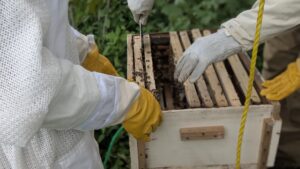
The initiative has already reached six communities across Zanzibar, providing practical beekeeping training to 40 participants, including 32 women. With women representing 80% of those trained, the project highlights their central role in developing new livelihood opportunities.
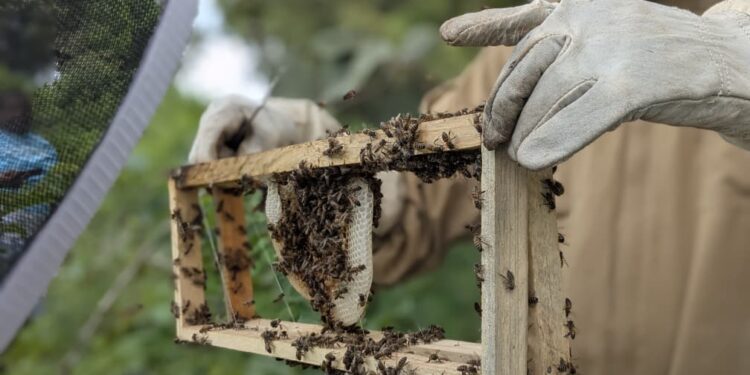
A total of 80 beehives have been established, with inspections conducted twice a month to monitor colony conditions and identify potential problems.
Beyond technical training, the initiative has created opportunities for community members to exchange experiences, share knowledge and explore sustainable beekeeping practices together.
By introducing activities that complement traditional coastal livelihoods, ZAVECO aims to strengthen local capacities and open new possibilities for community-based entrepreneurship.
Learning From the Challenges
While beekeeping offers promising opportunities, the experience in Zanzibar also demonstrates that establishing a productive activity requires continuous technical support and adaptation to local conditions.
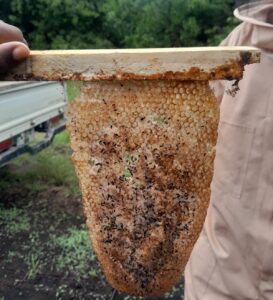
One of the main challenges has been wax moth infestation, affecting approximately 36 reported hives, with repeated occurrences particularly between August and January.
The problem has been observed in communities such as Kikungwi, Kibele and Unguja Ukuu, and occasionally in Uzi.
Despite consultations with beekeeping specialists and the application of sanitation methods, including flaming and boiling hive components, wax moth infestations remain a recurring challenge.
Black beetles and ants have also been observed across different project sites, requiring regular inspections and further investigation into effective control measures.
Another concern is bee absconding, a phenomenon in which colonies abandon previously occupied hives. In some observations, approximately half of the colonised hives experienced this problem, although the figure is still being verified.
Possible contributing factors identified through expert consultations include hive construction materials and pest infestation. Further assessment is needed to better understand the causes and improve colony survival.
These challenges are providing valuable practical lessons for the communities involved, highlighting the importance of monitoring, technical assistance and locally appropriate management practices.
From Beehives to Local Business Opportunities
The next challenge is transforming beekeeping knowledge and infrastructure into sustainable economic opportunities.
ZAVECO is exploring the development of a practical business model based on products such as honey and beeswax, with the aim of identifying accessible income-generating activities for participating communities.
For women in particular, these activities could create opportunities to engage in small-scale production, processing and marketing, strengthening their participation in local value chains.
However, achieving this potential will require reliable production, appropriate technical support and market-oriented planning.
Building Resilience Beyond the Sea
The Zanzibar experience illustrates an important principle of sustainable coastal development: strengthening coastal communities does not necessarily mean expanding fishing activities.
It can also mean diversifying livelihoods, developing new skills and creating economic opportunities that complement the traditional relationship between people and the ocean.
For ZAVECO, beekeeping is therefore more than the introduction of a new activity. It is a learning process that brings together community participation, women’s empowerment, technical innovation and local entrepreneurship.
The journey is still developing, and important challenges remain. Yet the initiative demonstrates how community-driven livelihood diversification can contribute to building more resilient and inclusive coastal economies.
How Beekeeping Is Creating New Opportunities for Zanzibar’s Coastal Communities