


Are orcas really attacking boats? What science tells us – For several years, an unusual interaction between humans and one of the ocean’s most intelligent predators has been unfolding along the Atlantic coasts of the Iberian Peninsula.
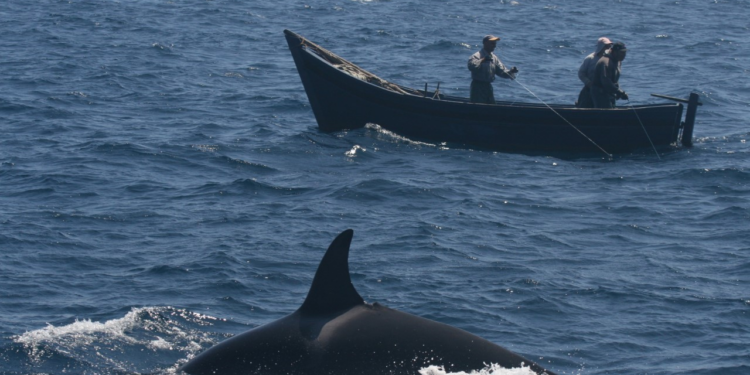
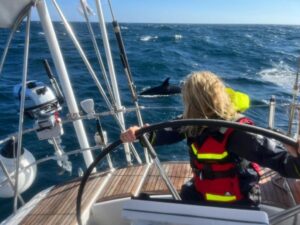
Orcas have approached sailing boats, pushed hulls and repeatedly targeted rudders. Some encounters have caused serious damage, leaving vessels unable to navigate.
The phenomenon, widely reported since 2020, has generated dramatic headlines and an equally dramatic explanation: are the orcas attacking boats to take revenge on humans?
A new scientific study suggests that the story may be very different.
Researchers who observed Iberian orcas interacting with their research vessel over several years found evidence consistent with curiosity, exploration and socially transmitted behaviour, although they stress that the ultimate cause and purpose of the interactions remain unresolved.
The interactions started earlier than we thought
The study, published in Marine Mammal Science in August 2026, examined seven encounters between Iberian orcas and a research vessel in southern Portugal between 2018 and 2025.
This pushes the documented history of physical boat interactions back by approximately two years compared with the widely reported beginning of the phenomenon in 2020.
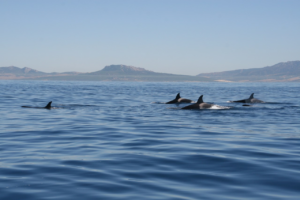
Researchers identified 26 individual orcas during the encounters. Eight made direct physical contact with the vessel: two adult females and six juveniles of both sexes belonging to five recognised matrilines.
Underwater footage showed a wide spectrum of behaviour.
Some animals gently touched the vessel. Others pushed it, changed its direction or caused it to rotate or tilt. The observations ranged from apparent curiosity to more energetic behaviour that researchers classified as potentially agonistic.
This complexity is important: describing every interaction simply as an “attack” may obscure what the animals are actually doing.
Revenge makes a good story, but where is the evidence?
One popular explanation has circulated repeatedly: an orca was supposedly injured by a vessel and subsequently began attacking boats, with the behaviour then spreading to other members of the population.
It is an appealing narrative because it gives the events a recognisable human motivation.
But the new study does not establish revenge as the explanation.
Instead, the researchers observed a strong juvenile component and evidence compatible with exploration and social transmission. The participation of additional individuals over time also supports the possibility that the behaviour can spread socially within this highly social species.
That does not mean scientists can simply declare that the orcas are “playing”.
The authors themselves are more cautious: the cause and purpose remain unknown, and their observations included behaviours ranging from curiosity to more forceful physical contact. A separate 2026 scientific analysis has likewise argued that play, exploration, maladaptive responses and cultural transmission are possible explanatory frameworks, while proposing that researchers also examine how the animals learn the consequences of manipulating a moving rudder.
So perhaps the most scientifically accurate question is not “Why are orcas attacking us?” but rather:
Why the rudder?
One of the most striking characteristics of the phenomenon is the animals’ interest in the rudder.
The international workshop on Iberian orca-vessel interactions convened in Madrid by the Spanish government in 2024 specifically described encounters in which orcas ram the rudder, sometimes damaging or breaking it and leaving the vessel unable to navigate.
A moving rudder is also an unusual object in an orca’s environment: it moves through the water, responds when pushed and changes behaviour according to the movement of the vessel.
This has encouraged researchers to consider not only why an interaction starts, but also whether the response produced by the rudder itself could help maintain the behaviour.
In other words, the boat may inadvertently become an interactive object.
And for an intelligent, social and highly exploratory animal, that interaction could be rewarding enough to repeat.
Spain is learning to live with the phenomenon
For Spain, this is no longer simply an interesting case of animal behaviour. It has become a practical issue for marine conservation and navigation safety.
The Spanish government has been studying the phenomenon with scientists and authorities from Portugal and Morocco. Satellite tagging has also been used to better understand orca movements and provide information that can help sailors reduce the probability of encounters.
Interestingly, the latest official Spanish figures show that interactions declined overall during summer 2025, although they increased slightly along the northern Spanish coasts of Galicia and the Cantabrian region compared with 2024.
The geography of the issue is therefore important.
These animals move through Atlantic Iberian waters, with their distribution closely associated with Atlantic bluefin tuna, an important prey species. Spanish authorities consequently identify periods and areas where the probability of encountering them is higher.
For 2026, Spain recommends particular caution between April and October, with specific risk areas identified around the Strait of Gibraltar/Gulf of Cádiz and Galicia.
What should sailors actually do?
This is where the story becomes particularly relevant to the Blue Economy.
Scientific understanding of the behaviour has evolved, and so have recommendations about how vessels should respond.
The 2024 international workshop recommended that, during an encounter, mariners move away from the whales as quickly as possible, aiming to leave the area of interaction and notifying the authorities. The experts stressed that moving away cannot guarantee that an interaction will end or prevent damage, but may reduce risk.
Current Spanish guidance similarly advises vessels not to stop, but to navigate toward the coast or shallower waters where safe to do so. People aboard should remain away from vulnerable positions along the sides of the vessel, and encounters should be reported to maritime rescue authorities.
At the same time, authorities strongly warn against deterrent methods that could injure or disturb the animals.
This is particularly important because the Iberian orcas represent a small and conservation-sensitive population. The international workshop notes their Critically Endangered status on the IUCN Red List and stresses that harmful deterrence can be both illegal and counterproductive.
Scientific study:
Marine Mammal Science – Insights Into a Disruptive Behavior of Iberian Killer Whales With Boats
Spanish official information and safety recommendations:
MITECO – Iberian orcas and vessel interactions
Are orcas really attacking boats? What science tells us