


When the sea changes, so does the menu: Fish Very Good in Trieste, Italy –
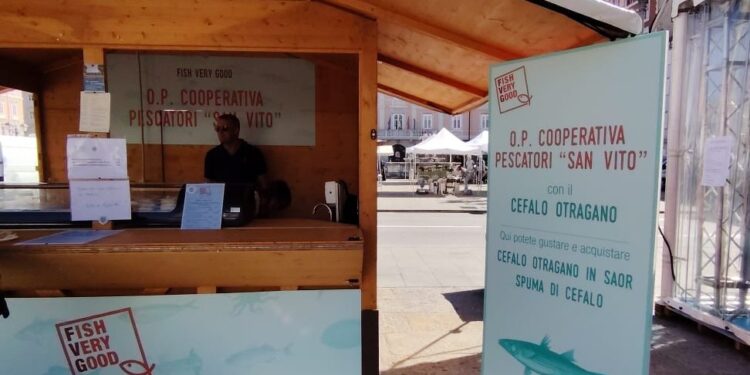
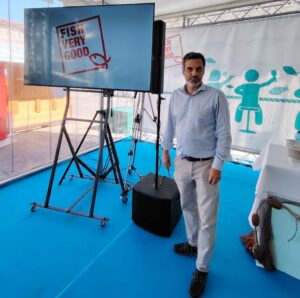
The name Fish Very Good has a double meaning. It refers to Friuli Venezia Giulia (FVG), while also recalling the Italian expression Fresco, Vicino e Genuino fresh, close and genuine.
This idea was visible throughout the event. Local producers presented their products directly to visitors, while fishermen and representatives of the sector talked about their work and the changes they are seeing in the sea.
According to Paolo Marchese, Head of the Internationalization and EU Policy Department of the Chamber of Commerce of Venezia Giulia and coordinator of FLAG Friuli Venezia Giulia, one of the main goals is to encourage people to choose local and seasonal products.
«“We want to support the use and consumption of local and seasonal fresh food, including seafood caught in a sustainable way.”»
From the Sea to the Kitchen
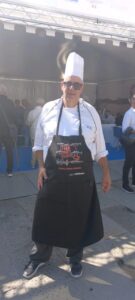
A live cooking demonstration was also part of the event, with chef Davide Morsolin preparing local seafood for the audience.
Morsolin has been working as a chef for 52 years. For him, introducing people to local products is an important part of his profession.
«“Bringing local products to the attention of the population is extremely important.”»
His long experience in the kitchen also gives him a close view of how local seafood is changing.
When the Sea Changes, the Menu Changes
During the interview, Morsolin spoke about the changes he has noticed with rising sea temperatures and the appearance of species that were not traditionally common in the area.
He mentioned species such as blue crab and leerfish, and the need for local communities to adapt.
«“Climate change brings us fish that we did not have before. With the increase in sea temperature, we continuously find species such as blue crab and leerfish. We have to adapt. They have adapted to our climate, and we have to consume these products.”»
For a chef, adaptation can also happen in the kitchen.
Instead of ignoring new or less familiar species, chefs can help people discover how they can be prepared and included in local cuisine.
As Morsolin explained:
«“We do not invent anything; we reinterpret and rework these products.”»
In this sense, adapting local cuisine to a changing sea can also become an opportunity to rethink how value is created along the fisheries supply chain.
Adding More Value to Local Fisheries
Another topic raised by Paolo Marchese was the need to look beyond catching fish.
For local fisheries, processing and transforming seafood can create additional value and offer new ways of reaching consumers.
«“For fisheries, it is very important to start also to transform and process the food, not only to catch, but to give major value and added value to what they do.”»
This is also linked to changing consumer habits. Ready-to-cook and ready-to-eat products are becoming more common, especially as people have less time for traditional food preparation.
Marchese explained that supporting local processing could help make local seafood more accessible to consumers, instead of relying mainly on products coming from far away.
But changes in the fisheries sector are not only about processing and markets. They can also affect some of the foods and recipes that consumers associate most closely with local traditions.
What Happens to Traditional Dishes When the Sea Changes?
One example discussed during the interview was vongole, commonly used in dishes such as pasta con le vongole.
Marchese explained that local availability of this shellfish is becoming very limited.
«“People think that we can have pasta con le vongole, but unfortunately vongole in our area is going to be at a very, very low level or zero.”»
The example shows how changes in marine resources can eventually reach the dinner table. A traditional dish may remain popular, while the local ecosystem may no longer provide enough of one of its main ingredients.
For this reason, introducing consumers to other local seafood can become an important part of keeping local products on local menus.
This connection between what happens at sea and what consumers choose to eat was also at the heart of the Fish Very Good event.
Connecting Producers and Consumers
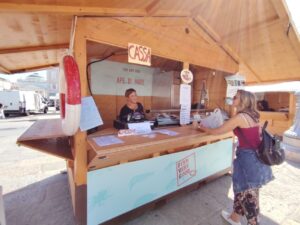
Beyond the cooking demonstration, Fish Very Good offered visitors a chance to meet local producers and learn more about seafood from different parts of Friuli Venezia Giulia.
The event also attracted visitors from Italy and other countries, adding a small tourism dimension to the initiative.
For Marchese, the purpose is not simply to sell seafood. It is also about helping people understand where their food comes from, who produces it, and what is happening to the marine environment.
After 52 years in the profession, Morsolin expressed the idea in a simple way: local products need to be known and appreciated by the people who live around them.
Fish Very Good brought that idea directly to the public — with producers, fishermen and a chef sharing the same space, and local seafood moving from the sea, through the hands of those who work with it, and finally onto the plate.
When the sea changes, so does the menu: Fish Very Good in Trieste, Italy