



Blue Horizons in Algeria’s Desert: The National Forum on Saharan Aquaculture
The Sahara covers over 60% of Algeria’s territory and holds vast groundwater reserves that make it a promising environment for developing aquaculture projects. As the country seeks to diversify its economy and strengthen food security, aquaculture has emerged as a sustainable and strategic choice. In this context, the Higher School of Saharan Agriculture of Adrar hosted the First National Seminar on Aquaculture in Saharan Zones (SNAZS 2025) on October 29–30, 2025, bringing together researchers and experts from across the country to explore opportunities and challenges in developing this vital sector in southern Algeria.
Aquaculture has become one of the world’s most important responses to food and climate challenges. Fish provide a rich source of animal protein while requiring significantly less water than traditional livestock. In Algeria, aquaculture in Saharan regions represents a strategic opportunity — leveraging the country’s underground water resources and the favorable temperature profiles of the desert. Regions such as Adrar, Béchar, and El Oued are increasingly recognized as potential hubs for sustainable fish production, integrating desert resilience with blue growth.
Algeria’s Policies Supporting the Aquaculture Sector
The Algerian government has introduced several measures to promote aquaculture and attract new investors, including:
Low-interest loans for aquaculture entrepreneurs and farmers.
Special insurance schemes covering natural and technical risks in fish farming.
Financial incentives per kilogram of production, encouraging domestic output, and reducing imports.
Moreover, national programs now emphasize integrated agri-aquaculture systems, where fish farming and crop production coexist, maximizing water use efficiency and improving soil fertility — a model particularly suited for arid zones.
SNAZS 2025: A Scientific Platform for Sustainable Development
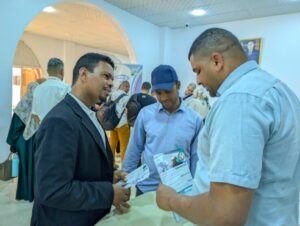
The First National Seminar on Aquaculture in Saharan Zones (SNAZS 2025), organized by the Higher School of Saharan Agriculture in Adrar, marked a key milestone for the sector’s evolution in Algeria. Over two days, participants engaged in scientific workshops and debates on topics such as:
The challenges of fish farming in arid regions and innovative adaptation techniques.
The replacement of fishmeal with plant-based proteins for environmentally friendly feed.
Groundwater quality and sustainability in southern provinces such as Adrar, Béchar, and El Oued.
The development of smart systems combining agriculture and aquaculture in desert environments.
Researchers from various Algerian universities, along with representatives from the National Institute of Agronomic Research (INRAA), shared their expertise and field experiences.
Case studies from Biskra, Adrar, and Béchar showcased successful pilot projects, proving that the desert can indeed become a fertile ground for innovation and sustainable food production.
New Horizons for a Blue Economy in the Desert
One of the key outcomes of the seminar was the recognition that southern Algeria can be a driver of the national blue economy.
Aquaculture offers multiple benefits: job creation for youth, new opportunities for agribusiness and food industries, and improved local food security.
Furthermore, fish-farming wastewater, rich in organic nutrients, can be reused for irrigation, creating a closed ecological cycle that enhances both sustainability and productivity.
The First National Seminar on Aquaculture in Saharan Zones marks a significant milestone in environmental and scientific awareness in Algeria. It is not merely a showcase of academic research but a bridge between universities, institutions, and field practitioners. Such events pave the way for a sustainable blue economy rooted in the heart of the Sahara, proving that with knowledge, innovation, and cooperation, even the desert can become a source of life and prosperity.
Blue Horizons in Algeria’s Desert: The National Forum on Saharan Aquaculture