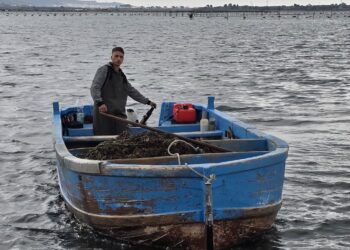



Lake Victoria Basin International Conference 2026: Kisumu, Kenya | 5–9 October 2026 – Held in Kisumu, Kenya, the event provided a framework for dialogue on water resources, climate resilience, agriculture, the Blue Economy and the role of emerging technologies in addressing shared development challenges. Our encounter with Alice Hamisi, a Kenyan aquaculture specialist and project management professional working in the African Great Lakes region, particularly Lake Victoria, added a valuable local perspective to these discussions, highlighting the importance of connecting environmental biomonitoring and conservations, with technological innovation and professional expertise while in cooperating institutions and the needs of the communities to achieve sustainable development of Lake Victoria.

A Shared Basin, a Shared Future
Lake Victoria is much more than a freshwater resource. As Africa’s largest lake and a vital component of the Nile River Basin, it connects countries, communities, economic activities and ecosystems across East Africa.
The wider Lake Victoria Basin extends across Kenya, Uganda, Tanzania, Rwanda and Burundi, supporting the livelihoods of more than 40 million people through fisheries, agriculture, tourism, transport, energy generation and domestic water supply.
Yet this extraordinary natural and economic resource faces growing pressures. Climate variability, environmental pollution, deforestation, invasive species, rapid urbanisation and increasing demand for water and food are placing significant strain on the basin’s ecological integrity and development potential.
These challenges cannot be addressed in isolation. They require coordinated responses, shared knowledge, stronger institutions and solutions capable of connecting environmental protection with economic and social development.
Harnessing Technology and Innovation
Under the theme “Harnessing Technology & Innovation for Sustainable Development in the Lake Victoria Basin,” LVBICE 2026 placed particular emphasis on the transformative potential of emerging technologies.
Artificial intelligence, the Internet of Things, remote sensing, digital monitoring systems and data analytics offer new possibilities for improving water resource management, agricultural productivity, climate adaptation and infrastructure planning.
The conference programme addressed a wide range of interconnected priorities, including:
- Climate monitoring and smart water infrastructure.
- Blue Economy development and climate-smart agriculture.
- Integrated water resource management and disaster risk reduction.
- Circular economy, renewable energy and pollution control.
- Sustainable and climate-resilient urban infrastructure.
- Innovative financing, policy and governance frameworks.
- Inclusive innovation and community empowerment.
- Artificial intelligence, big data and entrepreneurial ecosystems.
Together, these themes reflect a central principle: technology becomes meaningful for sustainable development when it responds to real territorial needs and is supported by inclusive governance and cooperation.
From Innovation to Regional Cooperation
One of the defining ambitions of LVBICE 2026 was to create a regional platform connecting policymakers, public institutions, researchers, development organisations, private-sector innovators and local communities.
The conference concept identified several potential outcomes, including a regional roadmap for integrating smart technologies into water management and agriculture, stronger professional networks, policy recommendations, new partnerships and a shared repository of innovative practices.
For a transboundary ecosystem such as Lake Victoria, this integrated perspective is particularly relevant. Environmental processes, economic activities and development challenges do not stop at national borders. Effective responses therefore depend on the capacity to build cooperation across countries, sectors and institutions.

Connecting the Conference with local expertise: our meeting with Alice Hamisi
We had the opportunity to speak with Alice Hamisi, a Kenyan professional specialising in aquaculture and aquatic food systems, with a focus on Lake Victoria.
Our discussion provided a valuable human connection to the professional expertise that exists within the region.
Her areas of specialisation reflect the importance of bringing together technical knowledge of aquatic production systems and the capacity to plan and manage development initiatives.
In the Lake Victoria Basin, professionals with such competencies can play an important role in connecting local priorities, institutional programmes and wider cooperation opportunities.
This is also one of the perspectives that BlueLifeHub seeks to highlight: the importance of recognising local expertise and strengthening connections between people, institutions and initiatives working towards more sustainable aquatic economies.
The future of Lake Victoria will depend not only on technologies and investment, but also on the professionals, researchers, public officials and community actors who can translate knowledge into context-sensitive approaches and collaborative action.
The value of an international conference lies not only in the subjects discussed, but also in its potential to encourage continued collaboration.
LVBICE 2026 emphasis on innovation and partnership therefore resonates with a wider understanding of sustainable development: one in which technologies, institutions and communities work together rather than independently.
The future of the Lake Victoria Basin will be shaped by the capacity to connect technology with local knowledge, innovation with cooperation, and sustainable development with the communities that depend on its waters.
Lake Victoria Basin International Conference 2026: Kisumu, Kenya | 5–9 October 2026