

Taranto’s mussel farming tradition: A new generation shaping the future of small-scale aquaculture. At the heart of this heritage is the famous Cozza Tarantina, the Mediterranean mussel (Mytilus galloprovincialis), whose cultivation has been passed down through generations of local families.
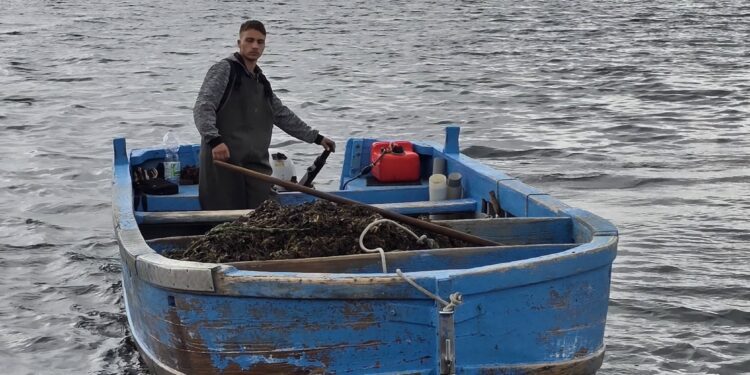
Today, despite environmental challenges and changing markets, this tradition remains alive thanks to people like Francesco Valentini, a 22-year-old mussel farmer working with his family’s Cooperativa Mitil Marpiccolo.
Blue Life Hub met Francesco during the early stages of the production cycle, discovering a story of dedication, family knowledge and a young entrepreneur’s strong connection with the sea.
From mussel spat to the Cozza Tarantina
Mussel farming is a patient and labour-intensive activity. The traditional production cycle in Taranto takes approximately 16–18 months, beginning with the collection of mussel spat, the juvenile mussels that will eventually become the next harvest.
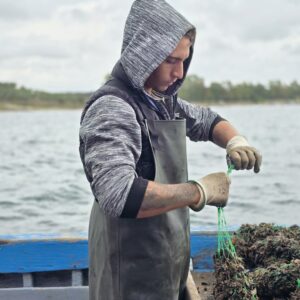
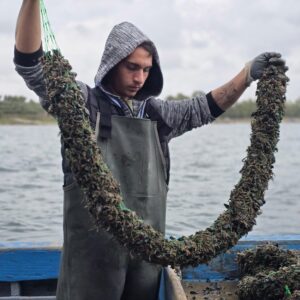
Francesco’s work starts with collecting spat from specially prepared collectors and transferring the young mussels into mesh net socks, where they continue growing under carefully managed conditions.
Throughout the cycle, mussels require regular attention, sorting and maintenance. One of the most distinctive local practices is sciorinatura, a traditional technique in which mussel ropes are temporarily exposed to air to remove fouling organisms attached to the shells.
This process helps reduce competition from epiphytes anepibionts, improves shell cleanliness and supports mussel growth without relying on chemical treatments.
These techniques represent generations of practical knowledge developed through a close understanding of the local marine environment.
A family tradition facing new challenges
Behind every harvest lies demanding physical work, commitment and considerable uncertainty.
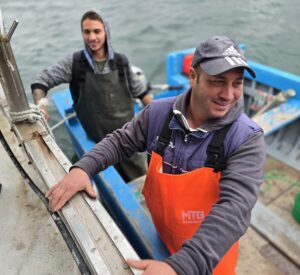
Francesco is capable of preparing up to 150 mussel net socks per day, an achievement proudly highlighted by his father, Enzo Valentini, who has passed on his experience and passion for mussel farming.
Yet maintaining this tradition is becoming increasingly difficult.
This year, severe marine heatwaves caused devastating losses, with the cooperative reporting mortality of nearly 80% of its mussel stock, particularly the spat intended for the following production cycle.
These losses illustrate the growing vulnerability of Mediterranean aquaculture to rising seawater temperatures and extreme climatic events.
Despite these difficulties, the Valentini family continues to invest its efforts in quality, specialised production and the preservation of its farming knowledge.
For Francesco, mussel farming is more than a profession. It represents his connection with the sea, his family and a way of life that he has chosen to carry forward.
Small-scale aquaculture and the value of the next generation
Francesco’s story highlights an important dimension of sustainability that is sometimes overlooked: the ability of coastal communities to retain young people and transfer knowledge between generations.
While many traditional fisheries struggle with an ageing workforce and limited generational renewal, family-run aquaculture enterprises can offer opportunities for young people to remain connected to their coastal territories.
The experience of Cooperativa Mitil Marpiccolo also raises a broader question about the future of aquaculture development.
Large-scale mariculture projects and major investments often dominate discussions about expanding seafood production. Yet smaller, locally adapted enterprises can offer valuable alternatives, particularly where environmental conditions, traditional expertise and community involvement are essential.
Rather than applying the same production model everywhere, sustainable aquaculture requires understanding each site’s ecological characteristics, carrying capacity and social context.
From Taranto to the Mediterranean and Africa
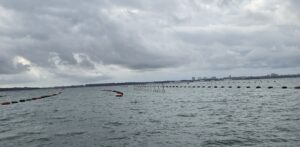
The experience of Taranto offers lessons that extend beyond southern Italy.
Small-scale mussel farming can contribute to local employment, nutritious seafood production and coastal livelihoods while maintaining a relatively low environmental footprint.
As filter-feeding organisms, mussels do not require external feed inputs and can contribute to nutrient cycling, although their environmental performance depends on appropriate site selection, farming density and responsible management.
Water quality monitoring, food safety controls and environmental protection remain essential, particularly in sensitive coastal environments such as Taranto.
For Mediterranean and African coastal communities exploring opportunities in the blue economy, family-run aquaculture enterprises could represent an important development model, combining local knowledge, appropriate technology and sustainable resource management.
The story of Francesco and Enzo Valentini reminds us that innovation does not always mean replacing tradition. Sometimes, it means preserving valuable knowledge while adapting it to new environmental and economic realities.
At just 22 years old, Francesco represents something particularly meaningful: a new generation choosing to remain connected to the sea, keeping a centuries-old tradition alive while helping shape the future of sustainable aquaculture.
Taranto’s mussel farming tradition: A new generation shaping the future of small-scale aquaculture