
Blue Education Beyond the Classroom: A New Series | The University of El Salvador Experience – What if some of the most important lessons for future marine scientists were learned not only in university laboratories, but also through direct engagement with mangrove ecosystems, fishing activities, aquaculture practices and coastal communities?
Understanding the ocean requires scientific knowledge. Understanding its relationship with society also requires observation, dialogue and awareness of how environmental changes affect people’s lives and livelihoods.
This is the perspective Blue Life Hub wishes to explore through a contribution shared by Ana Marlene Galdámez de Arévalo, from the University of El Salvador.
Her contribution raises a fundamental question for Blue Education: how can universities better connect marine science education with coastal ecosystems, local communities and sustainable development?
A question of particular relevance to universities across the Mediterranean and Africa.
A Pioneering Generation for Marine Science in El Salvador
In 2022, the University of El Salvador (UES), through its Faculty of Natural Sciences and Mathematics and School of Biology, introduced its Bachelor’s Degree in Marine Biology.
The programme expanded opportunities for specialised marine science education in a country where mangroves, estuaries, beaches, rocky reefs and oceanic environments support biodiversity and economic activities, including fisheries, aquaculture and tourism.
In 2026, some students from the programme’s first cohort are approaching the completion of their five-year academic journey, subject to fulfilling their individual academic requirements.
Throughout their education, these students are preparing to address challenges
affecting marine and coastal ecosystems, including ocean warming, acidification, pollution, habitat degradation and increasing pressure on natural resources.
Their academic journey aims to equip them with the scientific knowledge and practical skills needed to investigate environmental changes, contribute to biodiversity conservation and support the sustainable management of marine resources.
Coastal Ecosystems as Living Learning Environments
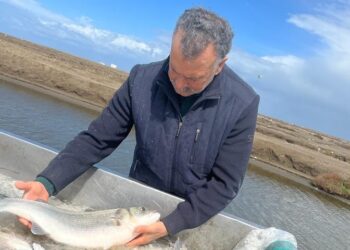
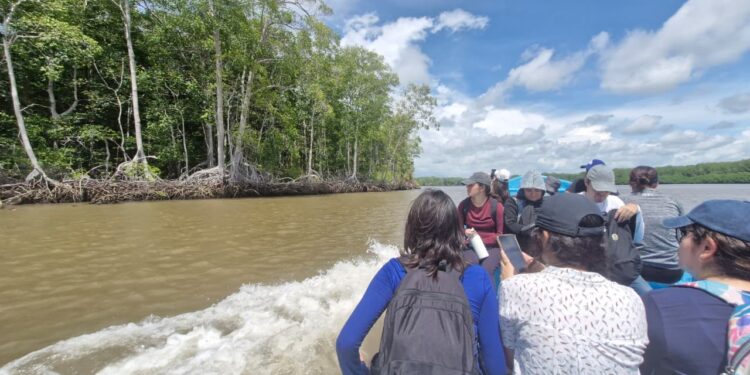
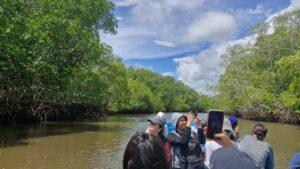
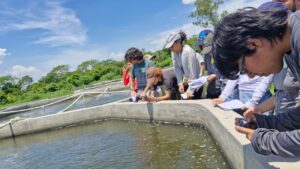
One of the most significant aspects of the experience shared by Ana Marlene Galdámez de Arévalo, who has accompanied students in their educational activities as part of her work at the University of El Salvador, is the importance of complementing academic education with practical field experiences.
Scientific knowledge of biodiversity, ecological processes and fisheries resources becomes more meaningful when students can observe coastal ecosystems directly and engage with the environmental, social and productive realities of local communities.
Mangroves provide an excellent example. Beyond their ecological importance as habitats for marine species, they contribute to coastal protection, carbon storage and local livelihoods.
Studying these ecosystems offers opportunities to understand the connections between biodiversity conservation, natural resource management, climate change and community well-being.
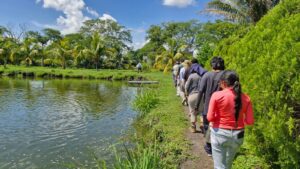
Similarly, understanding aquaculture involves not only biological production systems but also environmental sustainability, resource use and the economic and social contexts in which these activities operate.
For future marine professionals, connecting ecological knowledge with human realities is essential to understanding coastal sustainability.
This is the educational value of field-based learning: transforming scientific concepts into a deeper understanding of the relationships between marine ecosystems and society.
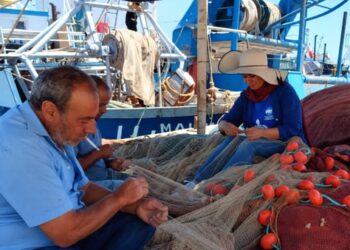
Coastal communities are more than locations where scientific research takes place. They are environments where people interact daily with marine resources and experience the consequences of environmental change.
Climate change, for example, is not only a matter of ocean temperatures or ecological indicators. Its consequences can affect fisheries, aquaculture production, food security and the ability of communities to adapt.
Engagement with these realities allows students to understand how environmental challenges translate into social and economic concerns.
It also encourages interdisciplinary learning, connecting marine biology with environmental management, economics and sustainable development.
The field-based learning experiences at the University of El Salvador highlight the value of direct engagement with coastal ecosystems and communities as an integral dimension of marine science education.
For Blue Life Hub, this provides a foundation for community-centred Blue Education, where scientific training is enriched by dialogue with local stakeholders, practical observation and an understanding of coastal territories.
A Valuable Educational Perspective for the Mediterranean and Africa
Although El Salvador, the Mediterranean and African coastal regions differ in their ecological and socioeconomic characteristics, they share challenges related to climate change, biodiversity loss, fisheries management, sustainable aquaculture and coastal protection.
The educational perspective emerging from El Salvador offers a valuable reference for developing programmes that integrate structured field experiences, community engagement and interdisciplinary collaboration.
In the Mediterranean, such approaches could involve coastal lagoons, wetlands, marine protected areas, fisheries and aquaculture environments.
Across African coastal regions, they could include mangroves where present, estuaries, artisanal fisheries and communities facing environmental and climate-related pressures.
These experiences should be adapted to local ecological and cultural contexts rather than replicated as a single model.
Marine science education becomes more relevant when students can connect scientific knowledge with the environmental, economic and social realities of coastal communities.
This shared principle could strengthen academic dialogue and cooperation between universities in Latin America, the Mediterranean and Africa.
Coastal Living Learning Labs: A Perspective for Future Cooperation
Building on this reflection, Blue Life Hub sees an opportunity to explore Coastal Living Learning Labs as a framework for international educational cooperation.
The concept would bring together universities, students, researchers and coasta
l communities in structured learning environments based on direct engagement with marine and coastal territories.
Rather than treating fieldwork as an occasional activity, universities could integrate practical experiences into academic pathways, enabling students to develop scientific and analytical skills while understanding local environmental challenges, traditional knowledge and community priorities.
For universities, this approach could strengthen interdisciplinary education and international cooperation. For coastal communities, it could create opportunities for knowledge exchange and participation in research and educational initiatives developed around local needs.
Nevertheless, the educational principles highlighted in the contribution from El Salvador offer a meaningful starting point for exploring such initiatives across different coastal regions.
The future of the Blue Economy will depend not only on technological innovation, scientific discoveries and investment, but also on the quality of education.
Marine biologists will increasingly contribute to biodiversity conservation, environmental monitoring, sustainable fisheries, aquaculture development, coastal management and climate adaptation.
These responsibilities require scientific competence, critical thinking, ethical commitment and an understanding of the communities whose livelihoods depend on marine resources.
The first generation of Marine Biology students at the University of El Salvador represents an important educational milestone and an opportunity to strengthen scientific capacity and international academic dialogue.
The most valuable marine education does not simply prepare students to study the ocean. It prepares them to understand the relationships between marine ecosystems, economic activities and the communities whose futures depend on them.
A Lesson Worth Sharing Across Oceans
The contribution shared by Ana Marlene Galdámez de Arévalo reminds us that educating future marine professionals is an investment in the long-term sustainability of our seas.
The University of El Salvador’s pioneering Marine Biology programme demonstrates the importance of expanding scientific education while recognising the value of practical learning and engagement with coastal realities.
For universities across the Mediterranean and Africa, it offers a valuable perspective: scientific excellence and community understanding should reinforce one another.
Perhaps one of the most strategic lessons we can offer future marine scientists is that understanding the ocean also means learning from the communities that live with it every day.
And that is a lesson worth sharing across oceans.
Acknowledgement
Blue Life Hub extends its sincere appreciation to Ana Marlene Galdámez de Arévalo, from the University of El Salvador, for sharing her valuable contribution, which provides the foundation for this editorial reflection on marine science education and inspired the creation of a series of articles exploring the role of education as a key pillar of sustainable development.
Blue Education Beyond the Classroom: A New Series | The University of El Salvador Experience