

Maldives approves first commercial Mud Crab Fattening Project – The initiative, authorised by the Ministry of Fisheries, Agriculture and Ocean Resources, will be implemented by Meritall Private Limited on Fiyoaree Island, in Gaafu Dhaalu Atoll.
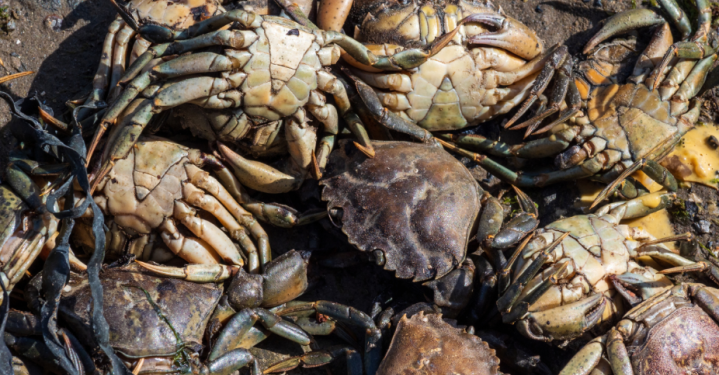
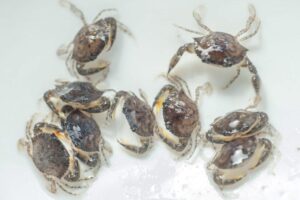
According to the Ministry, the project will focus on collecting small, low-weight mud crabs from the island’s Kulhiye Valhagandey wetland and transferring them to specialised facilities, where they will be fed and maintained until they reach a suitable condition for commercial sale.
The initiative aims to create new income opportunities, develop local seafood production and reduce dependence on imported high-value crabs, particularly those supplied to resorts, hotels and restaurants.
How the mud crab fattening system works
Mud crab fattening is a relatively short aquaculture process designed to increase the meat content and commercial value of crabs collected from natural environments.
As reported by Corporate Maldives, the project will target crabs weighing between 80 and 550 grams, particularly individuals with low meat content or soft shells.
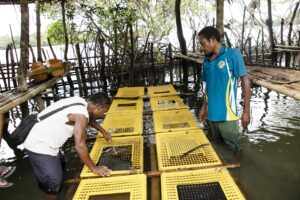
The selected crabs will be placed in individual compartments, plastic containers or specialised cage systems to prevent aggression and cannibalism.
They will receive a protein-rich diet, including small fish and squid, equivalent to approximately 5–10% of their body weight per day.
The fattening cycle is expected to last between 15 and 40 days, during which the crabs will increase their meat content and, where necessary, develop harder shells, improving their commercial quality and market value.
The Ministry considers this production model an opportunity to establish a new aquaculture activity in the southern Maldives, supporting local businesses and creating additional economic opportunities beyond traditional capture fisheries.
Opportunities for local communities and the blue economy
The development of mud crab fattening could provide an additional source of income for island communities already connected to fisheries and marine resources.
Unlike more complex aquaculture systems, crab fattening can be implemented through relatively simple infrastructure, although successful operations require appropriate feeding, water quality management, technical skills and access to suitable markets.
For the Maldives, where tourism generates demand for high-quality seafood, locally produced mud crabs could help strengthen the connection between aquaculture and the hospitality industry.
However, the project’s economic potential will depend on its operational performance, production costs and ability to maintain consistent product quality.
Environmental sustainability will be equally important. Mud crabs are part of coastal wetland and mangrove ecosystems, and their collection from the wild requires careful management to avoid excessive pressure on natural populations.
The challenge of moving beyond wild crab collection
The Maldives initiative also highlights a broader challenge for mud crab aquaculture: the dependence of fattening operations on crabs collected from natural habitats.
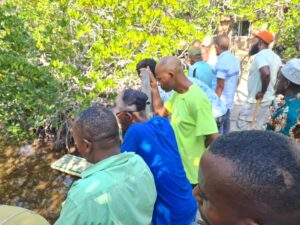
Similar initiatives are emerging along the African coast. In Kenya, for example, the Kenya Marine and Fisheries Research Institute (KMFRI), in collaboration with the Northern Rangelands Trust, introduced community-based mud crab farming activities on Pate Island, Lamu County, in 2025. These initiatives respond to opportunities in the seafood market while supporting alternative livelihoods for coastal communities. Yet, as in other emerging production areas, access to reliable hatchery-produced juveniles remains a major challenge for scaling up production without increasing pressure on wild stocks.
This is where research and international cooperation could make a significant difference.
The Southeast Asian Fisheries Development Center (SEAFDEC), through its Aquaculture Department in the Philippines, has carried out important research on mud crab breeding, larval rearing and juvenile production. Its work has contributed to the development of hatchery technologies for several Scylla species, demonstrating the potential to produce juvenile crabs under controlled conditions rather than relying exclusively on natural recruitment.
These advances could provide valuable technical knowledge for countries such as the Maldives seeking to develop a more complete aquaculture production chain.
Establishing reliable hatcheries would not eliminate every environmental challenge, but it could significantly reduce dependence on wild-caught juveniles and create new opportunities for specialised aquaculture businesses.
From a new initiative to a sustainable aquaculture sector
The approval of the first commercial mud crab fattening project represents an encouraging development for the Maldives and its efforts to diversify marine-based economic activities.
Its future will depend on balancing market opportunities with responsible management of coastal resources, while gradually strengthening technical expertise and production capacity.
The experience developed by prestigious research institutions such as SEAFDEC shows that the knowledge required to advance mud crab hatchery production already exists. Making this expertise accessible through research partnerships, technical training and cooperation between established and emerging aquaculture sectors could accelerate progress.
For Blue Life Hub, connecting these experiences and encouraging the exchange of practical knowledge is essential to developing sustainable aquaculture and creating new entrepreneurial opportunities for coastal communities.
Maldives approves first commercial Mud Crab Fattening Project