

Electric ferries and the future of sustainable water transport: the Hyke case also in Africa –
As African coastal cities expand, road congestion, air pollution and limited public transport infrastructure are becoming increasingly pressing challenges. Yet rivers, lagoons and coastal waterways remain underused as urban transport corridors.
Norwegian company Hyke is developing fully electric passenger ferries designed to make waterways part of everyday mobility. Its technology offers an interesting case study for the blue economy, particularly in cities such as Lagos, Nigeria, where major investments are underway to modernize water transport.
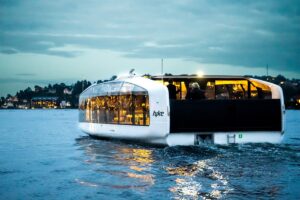
Hyke: electric ferries for urban waterways
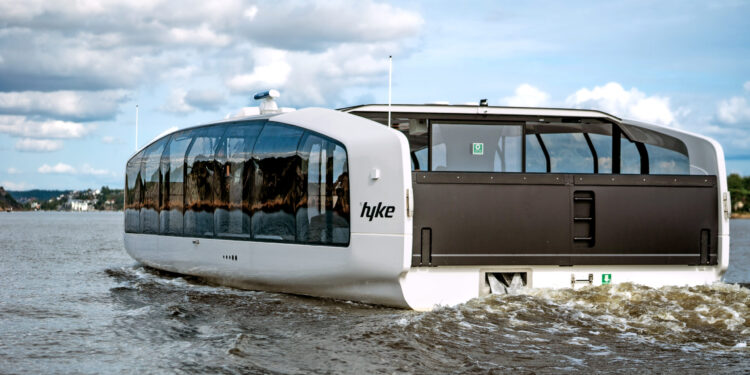
Hyke develops compact electric ferries as alternatives to conventional diesel-powered passenger boats.
Its F-15 Shuttle is designed to carry up to 50 passengers, with accessible boarding for people with reduced mobility, bicycles and strollers.
The vessel uses electric propulsion, eliminating direct exhaust emissions during operation and reducing engine noise. It also incorporates the Combined Charging System (CCS), a standard used by electric vehicles, potentially simplifying charging infrastructure.
According to the company, the F-15 can operate for up to 12 hours under optimal conditions, although actual performance depends on route length, speed, passenger load and charging arrangements.
Hyke’s approach goes beyond vessel electrification: it aims to integrate waterways into urban transport networks, offering practical connections where roads are congested.
Lagos and Omi Eko: transforming water transport in Nigeria
Lagos, one of Africa’s largest urban centres, has an extensive network of lagoons and waterways that could support more sustainable passenger transport.
The Omi Eko project, implemented through the Lagos State Waterways Authority (LASWA) with European development support, aims to establish an integrated electric ferry network.
The programme includes:
- 15 ferry routes covering approximately 140 kilometres;
- 25 new or upgraded passenger terminals;
- 75 electric ferries;
- charging and maintenance infrastructure;
- connections with existing public transport services.
The financing framework includes €170 million from the European Investment Bank, €130 million from the French Development Agency and a €60 million European Union grant.
Omi Eko illustrates how electric ferries can become part of a wider urban mobility strategy rather than operating as isolated transport services.
The case highlights the importance of adapting electric ferry technology to local transport demand, waterway conditions and infrastructure.
Could you imagine a similar solution transforming water transport in Mombasa, Kenya or other coastal cities? “It’s a matter of numbers.”
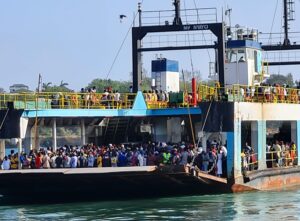
Environmental and economic opportunities
Electric ferries eliminate direct exhaust emissions during operation, helping improve air quality around terminals and waterfront communities. Quieter propulsion can also reduce noise disturbance.
Their overall environmental impact, however, depends on electricity generation, battery production and operational efficiency. Reliable charging infrastructure and renewable energy integration are therefore important considerations.
For African coastal cities, electric water transport could also generate opportunities for local employment and technical training in vessel maintenance, battery systems, charging infrastructure and maritime operations.
Improved connections between waterfront communities, markets and employment centres may strengthen economic inclusion, provided services remain safe, affordable and accessible.
A blue economy opportunity for African coastal cities
The potential of electric ferries extends beyond Lagos to other African cities connected by rivers, lagoons and coastal waterways.
Their adoption requires more than new vessels. Effective services depend on coordinated urban planning, accessible terminals, reliable electricity, appropriate regulation and long-term operational management.
Hyke demonstrates how electric ferry technology is evolving and but political vision, projects and cooperation needed to make sustainable water transport a practical urban service.
Together, they point towards a blue economy in which waterways are not simply natural boundaries, but valuable infrastructure connecting communities, reducing environmental pressures and creating new opportunities.
Sources and further reading
- Hyke – Omi Eko: Building a new electric water-transport network for Lagos
- European Investment Bank – Sustainable waterways transport in Lagos
Electric ferries and the future of sustainable water transport: the Hyke case also in Africa.