


Marine Rangers: Guardians of Marine Protected Areas through the Gökova Bay Experience – Declaring a Marine Protected Area (MPA) is only the first step towards protecting a marine ecosystem. The real challenge is ensuring that protection works every day.
Who monitors fishing activities? Who detects illegal fishing or improper anchoring? Who identifies pollution or abandoned fishing gear? And who has enough local knowledge to recognise when something unusual is happening at sea?
The Marine Ranger System developed in Gökova Bay, Türkiye, offers an interesting answer: involve local small-scale fishers directly in protecting the marine resources on which their livelihoods depend.
Gökova: protection requires a presence at sea
Gökova Bay is one of Türkiye’s most important marine ecosystems. Its habitats include extensive Posidonia oceanica meadows, while the bay provides breeding and feeding grounds for threatened species such as the Mediterranean monk seal and sandbar shark.
Six areas within the bay were declared No-Fishing Zones (NFZs) in 2010, while large-scale fishing operations were prohibited throughout the bay.
But regulations alone cannot guarantee effective protection. A protected area without regular observation risks remaining little more than a boundary on a map. The experience in Gökova showed that monitoring and enforcement needed a continuous presence at sea.
This is where the Mediterranean Conservation Society (MCS) plays a central role.
Founded in İzmir in 2012 as a nationwide non-profit organisation, MCS focuses on endangered species such as the Mediterranean monk seal and sandbar shark, together with monitoring and restoration of the marine ecosystems in which they live. Its approach also recognises another essential component of marine conservation: ensuring the continued existence of traditional coastal fishing and the people who make their living from it.
The organisation provides the structure behind the ranger system: local fishers contribute their knowledge and permanent presence at sea, while MCS provides organisation, employment, monitoring tools, scientific support and connections with public authorities.

From fisher to Marine Ranger
In 2013, MCS introduced its Marine Ranger System in Gökova to improve the protection of the No-Fishing Zones.
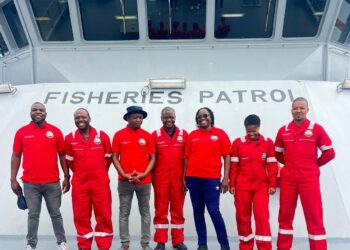
The model is practical. Rangers are selected from local small-scale fishers and employed by MCS. They patrol protected areas, observe illegal fishing, improper anchoring, pollution and other activities, and report possible infringements to the relevant government authorities.
They are not law-enforcement officers. Their role is to observe, record and report, supporting the institutions responsible for enforcement.
Technology strengthens this local presence. Rangers use the GPS-enabled SMART monitoring system to record patrol routes and incidents, transforming daily surveillance into structured information that can be analysed and incorporated into MPA management.
The model therefore combines two resources that are too often separated in marine conservation: traditional knowledge of the sea and structured environmental monitoring.
A fisher knows fishing grounds, seasons, gears, vessels and local practices. Once incorporated into an organised monitoring system, this knowledge becomes an important resource for detecting illegal activities and supporting sustainable fisheries management.
A local contribution to fighting IUU fishing
Illegal, unreported and unregulated (IUU) fishing is a global fisheries governance problem, but many illegal activities occurring along the coast are first detected locally.
Marine Rangers can provide the continuous presence that many MPAs lack. They do not replace Coast Guards or fisheries authorities; instead, they create a practical bridge between fishing communities, conservation organisations and public enforcement agencies.
The scale of this activity in Türkiye is significant. During the first six months of 2026, MCS Marine Rangers conducted 343 patrols, covered more than 8,000 kilometres and spent 777 hours in the field, reporting 219 illegal fishing incidents to the relevant authorities. The system currently operates in the Gökova, Fethiye-Göcek and Datça-Bozburun protected areas.
Scientific research based on monitoring data from Gökova also indicates a significant reduction in illegal fishing activity over time, highlighting the importance of sustained patrols as part of the recovery and management of coastal protected areas.
The lesson is simple: effective protection requires continuity at sea.
Beyond surveillance: ghost gear and environmental services
Once trained rangers regularly operate along the coast, their potential contribution extends well beyond fisheries surveillance.
They can observe changes in habitats and species, report pollution, support researchers and help identify abandoned, lost or otherwise discarded fishing gear (ALDFG), commonly known as ghost gear.
This is particularly relevant because fishers themselves possess valuable knowledge about where nets and other gear are likely to be lost.
Lost fishing gear can continue catching marine organisms, damage sensitive habitats and contribute to marine plastic pollution. Identifying and recovering it can therefore become an additional environmental service associated with MPA management.
Gökova provides an example. MCS has worked with local fishing cooperatives, authorities and other partners to identify and remove lost fishing gear. One initiative recovered approximately 7,000 metres of fishing line and 600 metres of fishing net from the marine environment.
The same network can potentially support biodiversity observations, habitat monitoring, scientific surveys, pollution reporting and environmental awareness activities.
Marine Rangers can therefore evolve from surveillance personnel into multifunctional coastal professionals providing environmental services to the protected area.

Conservation can become a livelihood
This may be one of the most important lessons from Gökova.
When Marine Protected Areas are perceived only as places where fishers are told what they cannot do, conservation can easily become a source of conflict.
A different dynamic emerges when fishers become partners in managing and protecting the resource.
A fisher becoming a Marine Ranger does not leave decades of experience behind. On the contrary, that knowledge acquires a new economic and environmental value.
The fisher knows the seabed.
The fisher knows the weather.
The fisher recognises fishing gear.
The fisher knows the other vessels.
The fisher understands where and when fishing pressure occurs.
These are professional skills with real value for MPA management.
The Gökova experience also shows that conservation and fishing livelihoods do not necessarily have to move in opposite directions. According to MCS, fish biomass inside some No-Fishing Zones has increased by as much as tenfold compared with areas outside the NFZs, while data collected by the Akyaka Fishery Cooperative indicated substantial increases in fisher income following the establishment and effective protection of these zones.
These results should not be attributed to the ranger system alone. They are part of a broader management approach combining No-Fishing Zones, surveillance, cooperation with authorities, scientific monitoring, habitat conservation and community participation.
But the opportunity goes beyond the recovery of fish stocks.
Alongside monitoring fishing activities, Marine Rangers can support biodiversity monitoring, scientific surveys, pollution reporting, ghost-gear identification and recovery, environmental awareness and other conservation activities.
This creates an important opportunity for livelihood diversification.
Instead of considering conservation only as a restriction on fishing, part of the knowledge and skills already present within fishing communities can be transformed into paid environmental services that help protect the resource itself.
In this sense, the Marine Ranger model introduces a different way of looking at conservation:
The knowledge traditionally used to harvest marine resources can also become a livelihood for protecting them.

The organisation behind the Rangers
The Gökova experience also highlights an important element of community-based conservation: fishers cannot be expected to manage an MPA alone.
An organisational structure is needed to transform local knowledge and willingness into an operational system.
In Gökova, MCS provides this backbone. It employs and coordinates the rangers, provides monitoring tools, connects observations with scientific programmes and maintains cooperation with government authorities.
At the same time, its work extends to ecological monitoring, including fish biomass, Mediterranean monk seals, sandbar sharks, seagrass and other components of the marine ecosystem.
MCS also supports initiatives aimed at maintaining small-scale fisheries and diversifying livelihoods. Traditional fishing tourism, for example, has been explored as a way to generate complementary income, reduce pressure on marine biodiversity and preserve local fishing culture.
The Marine Ranger is therefore not an isolated figure. The effective model is based on cooperation between fishers, conservation organisations, scientists, public authorities and coastal communities.
Each brings something different: local knowledge, organisational capacity, scientific evidence, regulatory authority and community participation.
From Marine Protected Areas to protected livelihoods
The success of an MPA should not be measured only by the number of hectares placed under protection.
We should also ask whether those hectares are actually monitored, scientifically assessed and supported by the communities whose livelihoods depend on them.
The experience of Gökova shows how Marine Rangers can help connect these dimensions. Local fisheries knowledge becomes a professional conservation skill. Monitoring illegal fishing protects biodiversity and legitimate fishing activities. Ghost-gear recovery improves the marine environment. Scientific monitoring provides evidence of whether protection is working. And complementary environmental activities can create new sources of income.
This changes the relationship between fishing communities and conservation.
Marine Rangers: Guardians of Marine Protected Areas through the Gökova Bay Experience