



Kenya Launches National Blue Economy Strategy: A Science-Driven Vision for Sustainable Ocean Development
Kenya has taken a significant step toward strengthening its position as one of Africa’s leaders in sustainable ocean governance with the launch of its National Blue Economy Strategy. The strategy reflects the country’s commitment to balancing economic growth with environmental stewardship while placing ocean science, innovation, and partnerships at the center of national development.
Announced by the Government of Kenya through the State Department for the Blue Economy and Fisheries under the Ministry of Mining, Blue Economy and Maritime Affairs, the strategy aligns closely with the United Nations Decade of Ocean Science for Sustainable Development (2021–2030) and the Ocean Decade Africa Roadmap. This alignment demonstrates Kenya’s intention to ensure that marine and freshwater resources contribute not only to economic prosperity but also to climate resilience, biodiversity conservation, and social inclusion.
A Comprehensive Framework for Sustainable Growth
Rather than focusing solely on fisheries, the National Blue Economy Strategy adopts a holistic approach that recognizes the interconnected nature of ocean-based sectors. The framework is organized around nine thematic priorities, including:
- Sustainable fisheries, aquaculture, and aquatic ecosystems
- Maritime transport and trade
- Renewable energy and marine mineral resources
- Sustainable coastal and marine tourism
- Human resource development
- Blue economy governance
- Sustainable financing
- Innovation and capacity building
- Social equity and environmental sustainability
Together, these priorities create a roadmap for transforming Kenya’s blue economy into a resilient and inclusive economic pillar capable of generating employment, attracting investment, and protecting marine ecosystems for future generations.
Science at the Heart of Decision-Making
One of the strategy’s defining strengths is its strong emphasis on science-based policymaking.
During the launch, Principal Secretary Betsy Njagi highlighted that the future of Kenya’s blue economy depends on evidence-based decisions supported by research, innovation, and collaboration.
Ocean science is expected to provide the knowledge needed to address complex challenges, including:
- Climate change impacts on coastal communities
- Marine pollution
- Biodiversity loss
- Sustainable fisheries management
- Ocean observation and monitoring
By integrating scientific research into governance, Kenya aims to improve the management of marine resources while supporting long-term economic development.
Partnerships as a Driver of Success
The strategy recognizes that achieving sustainable ocean development cannot be accomplished by government alone.
Cabinet Secretary Hassan Ali Joho emphasized that meaningful progress requires collaboration between governments, researchers, universities, international organizations, the private sector, and coastal communities.
Regional cooperation will also play an important role through partnerships with organizations such as IOCAFRICA, the UNESCO Intergovernmental Oceanographic Commission’s Sub-Commission for Africa and the Adjacent Island States. These partnerships are expected to strengthen scientific capacity, improve knowledge sharing, and accelerate implementation across the continent.

Supporting the Ocean Decade in Africa
Kenya’s strategy arrives during the second half of the UN Ocean Decade, reinforcing Africa’s growing leadership in sustainable ocean governance.
The Ocean Decade Africa Roadmap identifies key priorities for strengthening ocean science across the continent, including:
- Improved ocean observations
- Climate resilience
- Sustainable fisheries
- Marine biodiversity conservation
- Capacity development
- Inclusive partnerships
By aligning national policies with these regional priorities, Kenya contributes to broader efforts to achieve the Sustainable Development Goals, particularly SDG 14: Life Below Water.
Opportunities Beyond Conservation
The blue economy is increasingly recognized as a major driver of economic diversification.
For Kenya, the strategy presents opportunities to:
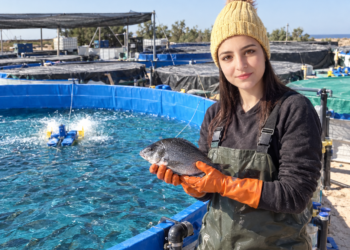
- Expand sustainable aquaculture production
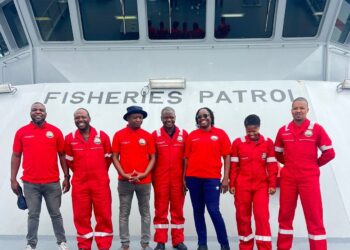
- Modernize fisheries management
- Promote responsible coastal tourism
- Strengthen maritime transport
- Support marine renewable energy
- Encourage innovation and entrepreneurship
- Create employment opportunities, particularly for young people
These investments have the potential to improve livelihoods while ensuring that economic growth does not come at the expense of healthy marine ecosystems. (SWARA Magazine)
A Model for Africa’s Blue Future
Kenya’s National Blue Economy Strategy represents more than a national policy—it signals a broader shift toward integrating science, sustainability, and inclusive governance into ocean development.
As African nations continue to recognize the economic and ecological value of their marine resources, Kenya’s approach offers a practical example of how evidence-based planning and strong partnerships can support resilient blue economies.
With continued investment in research, innovation, capacity building, and regional collaboration, the strategy has the potential to strengthen Kenya’s role as a continental leader in sustainable ocean development while contributing to healthier oceans and more resilient coastal communities across Africa.