



Partnerships Are Shaping the Future of the Sustainable Blue Economy
The future of the ocean cannot be secured by governments alone. Nor can it rely solely on researchers, private companies, or local communities. Addressing the growing challenges facing marine ecosystems—from climate change and biodiversity loss to food security and sustainable resource management—requires strong partnerships that connect science, policy, industry, and society.
This collaborative approach lies at the heart of the Sustainable Blue Economy Partnership (SBEP), one of the European Union’s flagship initiatives under the Horizon Europe programme. By bringing together countries, funding agencies, research institutions, businesses, and policymakers, the partnership aims to accelerate innovation while ensuring that economic development remains compatible with healthy oceans. (fasi.eu)
A European Commitment to Ocean Innovation
The Sustainable Blue Economy Partnership represents one of Europe’s largest coordinated investments in marine and maritime research and innovation. Coordinated by Italy and supported by the European Commission, the initiative brings together dozens of partner institutions across Europe to align national research programmes, avoid duplication of efforts, and jointly invest in solutions for ocean sustainability. The partnership plans to mobilize approximately €450 million over seven years through coordinated national and European funding. (bluepartnership.eu)
Rather than funding isolated research projects, the partnership promotes international collaboration where organizations from multiple countries work together on shared marine challenges. This model encourages knowledge exchange, technology transfer, and practical solutions that can be implemented across different regions.
Why Partnerships Matter
The blue economy encompasses sectors such as fisheries, aquaculture, renewable ocean energy, maritime transport, biotechnology, coastal tourism, marine conservation, and digital ocean technologies. These sectors are deeply interconnected.
For example:
Scientists develop technologies for monitoring marine ecosystems.
Technology companies transform research into digital tools.
Policymakers establish regulations that encourage sustainable practices.
Businesses invest in commercialization.
Coastal communities apply innovative solutions on the ground.
Without collaboration among these stakeholders, innovation often remains confined to laboratories instead of creating measurable environmental and economic impact.
Partnerships help bridge these gaps by creating ecosystems where research informs policy, industry scales innovation, and communities benefit from practical applications.
Supporting Research That Delivers Impact
One of the partnership’s primary objectives is to fund research and innovation projects capable of addressing real-world challenges rather than producing academic results alone.
Recent calls have focused on areas including:
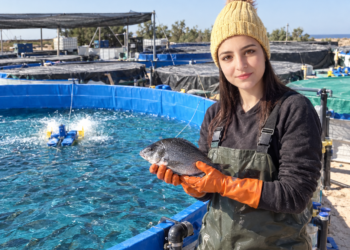
Sustainable fisheries and aquaculture
Marine biodiversity conservation
Blue bioeconomy and marine biotechnology
Digital Twins of the Ocean
Climate-smart management of marine spaces
Offshore renewable energy
Resilient coastal communities
Marine multi-use infrastructure
Ocean observation and digital innovation (EU Blue Economy Observatory)
These themes reflect the growing recognition that sustainable economic growth must be accompanied by ecosystem protection and climate resilience.
Strengthening International Collaboration
One of the partnership’s greatest strengths is its transnational approach. Marine ecosystems do not recognize political borders, making international cooperation essential.
Researchers from different countries can combine expertise, share research infrastructure, access specialized laboratories, and develop solutions applicable across multiple sea basins, including the Mediterranean, Baltic, North Sea, Black Sea, and Atlantic Ocean. (bluepartnership.eu)
This collaborative model also creates opportunities for universities, startups, SMEs, public authorities, and research organizations to participate in international consortia that would be difficult to establish independently.
Opportunities Beyond Research
The Sustainable Blue Economy Partnership is more than a funding mechanism. It is building a broader innovation ecosystem by facilitating access to research infrastructures, encouraging networking between ongoing projects, strengthening science-policy dialogue, and supporting knowledge exchange across sectors. (fasi.eu)
Such initiatives help transform scientific discoveries into practical applications that improve marine management, strengthen coastal economies, and support sustainable business development.
A Model for the Future Blue Economy
The future of the blue economy will depend not only on technological breakthroughs but also on the strength of the partnerships behind them.
As pressures on ocean resources continue to grow, collaborative innovation offers one of the most effective pathways toward balancing environmental protection with economic development. Initiatives like the Sustainable Blue Economy Partnership demonstrate that when governments, researchers, industry, and communities work together, they can accelerate progress toward climate neutrality, resilient coastal economies, and healthier marine ecosystems.
For young researchers, entrepreneurs, startups, and organizations working in marine and coastal sectors, these partnerships represent more than funding opportunities—they provide access to international networks, shared expertise, and the collaborative environment needed to shape the next generation of sustainable ocean solutions.
The transition to a sustainable blue economy is not the responsibility of a single institution or country. It is a shared journey that depends on cooperation, innovation, and a common commitment to protecting our ocean while creating opportunities for future generations.
Partnerships Are Shaping the Future of the Sustainable Blue Economy