


• WHO WE ARE
  • CONTACTS
  • PARTNERS
  • ADVERTISING
  • NEWSLETTER
Tuesday, June 16, 2026
BlueLifeHub
  • Home
  • News
  • Fishing
  • Aquaculture
  • Environment
  • Players
  • Innovation
  • Events
  • Integrated Activities
No Result
View All Result
Blue Life Hub
  • Home
  • News
  • Fishing
  • Aquaculture
  • Environment
  • Players
  • Innovation
  • Events
  • Integrated Activities
No Result
View All Result
Blue Life Hub
No Result
View All Result
Home Aquaculture

The aquaculture paradox: feeding fish with other fish

Many farmed fish species, such as salmon, bass, bream, trout, carp, are carnivorous. Their main food in intensive aquaculture systems consists of fishmeal and fish oil, derived from fishing small pelagic fish such as anchovies, sardines and mackerel. In practice, large quantities of wild fish are caught and processed into feed for other fish, which are locked in tanks or cages.

Gaspare Bilardello by Gaspare Bilardello
April 11, 2025
in Aquaculture, News
Reading Time: 2 mins read
0
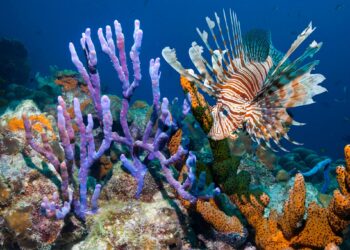
The aquaculture paradox feeding fish to other fish

The aquaculture paradox feeding fish to other fish

The aquaculture paradox: feeding fish with other fish – Aquaculture, often presented as a sustainable solution to meet the growing global demand for animal protein, hides an incongruity that is difficult to ignore: to raise fish, you kill other fish.
A food cycle biting its own tail!

Many farmed fish species, such as salmon, bass, bream, trout, carp, are carnivorous. Their main food in intensive aquaculture systems consists of fishmeal and fish oil, derived from fishing small pelagic fish such as anchovies, sardines and mackerel. In practice, large quantities of wild fish are caught and processed into feed for other fish, which are locked in tanks or cages.

This approach leads to several problems:

  • Overexploitation of the seas. It is estimated that about one third of global fishing is for the production of fishmeal and fish oil. This negatively impacts marine ecosystems and coastal communities that depend on those fish for food.
  • Energy inefficiency. It takes 2 to 5 kg of wild fish to produce 1 kg of farmed fish (depending on the species). The conversion factor increases dramatically for example for growing tuna in cages. This is contrary to the principles of the circular economy and sustainability.
  • Dependence on a limited resource. Wild fish populations are not infinite. Continuing to rely on this type of feeding seriously compromises the ecosystem.

Promoting aquaculture as “sustainable” in this context seems almost contradictory.

Fortunately, research is offering several innovative solutions to overcome this dependency, such as, for example, plant-based feeds: soy, algae, microalgae and other plant ingredients are already being used in part to replace fishmeal. Some studies show good results in terms of fish growth and health, although the omega-3 polyunsaturated fatty acid profile remains to be improved. (DHA, EPA)
Other feed comes from insects such as fly larvae and others that can be bred and processed into animal protein with high nutritional value. They are already used in some experimental feeds, with good results.
But also the recycling of fishing by-products such as waste and residues from the fishing industry which can be turned into feed, reducing waste and the need for further fishing.

A breakthrough is being achieved with integrated multi-trophic aquaculture (IMTA), i.e. a system where different species coexist symbiotically (e.g. fish, molluscs, algae) allowing nutrients in the environment to be reused and reducing the overall environmental impact.
However, the current system of aquaculture is predominantly based on feeding fish to other fish, which is an ecological paradox. If we really want fish farming to be part of the overall solution for a sustainable diet, we must break this vicious circle. The good news is that alternatives exist: what is needed is political will, investment in research and greater consumer awareness.

The aquaculture paradox: feeding fish to other fish
Tags: The aquaculture paradox: feeding fish with other fish
ShareShareTweetSend
Previous Post

Revolution against illegal fishing. A genetic test reveals everything in a few hours

Next Post

AZTI report: the route to a more sustainable and innovative European fishery

Gaspare Bilardello

Gaspare Bilardello

Related Posts

AE2026 – Aquaculture in Global Change

AE2026 – Aquaculture in Global Change

by Editorial staff
June 15, 2026

AE2026 - Aquaculture in Global Change As global demand for sustainable seafood continues to rise, aquaculture has emerged as one...

Our Ocean Conference 2026: Turning Conservation Commitments into Lasting Action

Our Ocean Conference 2026: Turning Conservation Commitments into Lasting Action

by Hadeer Amer Elkhouly
June 11, 2026

Our Ocean Conference 2026: Turning Conservation Commitments into Lasting Action As global leaders prepare to gather in Kenya for the...

Ancient Ocean Secrets Unearthed: 62-Million-Year-Old Fossil Site Discovered in Egypt’s Eastern Desert

Ancient Ocean Secrets Unearthed: 62-Million-Year-Old Fossil Site Discovered in Egypt’s Eastern Desert

by Hadeer Amer Elkhouly
June 10, 2026

Ancient Ocean Secrets Unearthed: 62-Million-Year-Old Fossil Site Discovered in Egypt’s Eastern Desert Egypt’s Eastern Desert has yielded a remarkable scientific...

Egypt, UNDP, and GFCR Launch Landmark Initiative to Protect Resilient Red Sea Coral Reefs

Egypt, UNDP, and GFCR Launch Landmark Initiative to Protect Resilient Red Sea Coral Reefs

by Hadeer Amer Elkhouly
June 9, 2026

Egypt, UNDP, and GFCR Launch Landmark Initiative to Protect Resilient Red Sea Coral Reefs HURGHADA, Egypt — On the sidelines...

Next Post
AZTI report the route to a more sustainable and innovative European fishery

AZTI report: the route to a more sustainable and innovative European fishery

Leave a Reply Cancel reply

Your email address will not be published. Required fields are marked *

Categories


Newsletter

Blue Life Hub

The goal of Blue Life Hub is to inform and network between players in the Mediterranean and Africa, areas that have very important commonalities and shared interests.

Categories

  • Fishing
  • Aquaculture
  • Environment
  • Players
  • Innovation
  • Events

Follow us on:

Stock images by Depositphotos

  • WHO WE ARE
  • CONTACTS
  • PARTNERS
  • ADVERTISING
  • NEWSLETTER

© 2025 BLUE LIFE HUB. - P.Iva: 06325260823

Welcome Back!

Login to your account below

Forgotten Password?

Retrieve your password

Please enter your username or email address to reset your password.

Log In

Add New Playlist

Our Spring Sale Has Started

You can see how this popup was set up in our step-by-step guide: https://wppopupmaker.com/guides/auto-opening-announcement-popups/

No Result
View All Result
  • Home
  • News
  • Fishing
  • Aquaculture
  • Environment
  • Players
  • Innovation
  • Events
  • Integrated Activities
  • Who We Are
  • Contacts
  • Partners
  • Advertising
  • Newsletter

© 2025 BLUE LIFE HUB. - P.Iva: 06325260823