



• WHO WE ARE
  • CONTACTS
  • PARTNERS
  • ADVERTISING
  • NEWSLETTER
Friday, May 15, 2026
BlueLifeHub
  • Home
  • News
  • Fishing
  • Aquaculture
  • Environment
  • Players
  • Innovation
  • Events
  • Integrated Activities
No Result
View All Result
Blue Life Hub
  • Home
  • News
  • Fishing
  • Aquaculture
  • Environment
  • Players
  • Innovation
  • Events
  • Integrated Activities
No Result
View All Result
Blue Life Hub
No Result
View All Result
Home Aquaculture

Aquaculture Moves Forward: Researchers Successfully Rear Slipper Lobster Larvae to Juveniles

This scientific breakthrough in the Philippines could pave the way for future aquaculture initiatives in the Mediterranean and beyond, unlocking new economic opportunities for coastal communities while promoting sustainable seafood production.

Orazio Albano by Orazio Albano
January 22, 2025
in Aquaculture, Environment, News
Reading Time: 3 mins read
0
Aquaculture Moves Forward Researchers Successfully Rear Slipper Lobster Larvae to Juveniles

Aquaculture Moves Forward Researchers Successfully Rear Slipper Lobster Larvae to Juveniles

Aquaculture Moves Forward: Researchers Successfully Rear Slipper Lobster Larvae to Juveniles – Researchers at the Southeast Asian Fisheries Development Center Aquaculture Department (SEAFDEC/AQD) in Tigbauan, Iloilo, have successfully reared slipper lobster larvae into juveniles, marking a significant breakthrough in the effort to establish slipper lobster farming in the Philippines.

The juveniles, which represent a crucial step in the aquaculture process, were the first-ever produced at SEAFDEC/AQD. They hatched in September from an egg-bearing slipper lobster collected in Carles, Iloilo. The species, Thenus orientalis, commonly known as “pitik-pitik”, that could also bears strong similarities to the slipper lobster (Scyllarides latus), which is found in the Mediterranean Sea and the eastern Atlantic Ocean.

The successful production of slipper lobster juveniles in SEAFDEC/AQD hatchery represents a crucial milestone in aquaculture. Once consistent and scalable juvenile production is achieved, the process can advance to mass production in nurseries and grow-out farms, paving the way for the sustainable farming of this valuable species.
Aquaculture facts

The slipper lobster larvae underwent four phyllosomal stages and a nisto stage before molting into juveniles after 42 days, reaching a width of 0.6 cm and a length of 1.6 cm. The initial hatching of slipper lobster eggs at SEAFDEC/AQD was part of a Japan-funded project aimed at developing a new aquaculture industry in the Philippines.
With the support of Australia’s Centre for International Agricultural Research, a multinational initiative led by Dr. Clive Jones helped establish sustainable spiny lobster aquaculture in Indonesia and Vietnam, focusing on hatchery development, seed collection, and grow-out optimization.
Feed and feeding remain a big challenge for the crustacean in different stages.

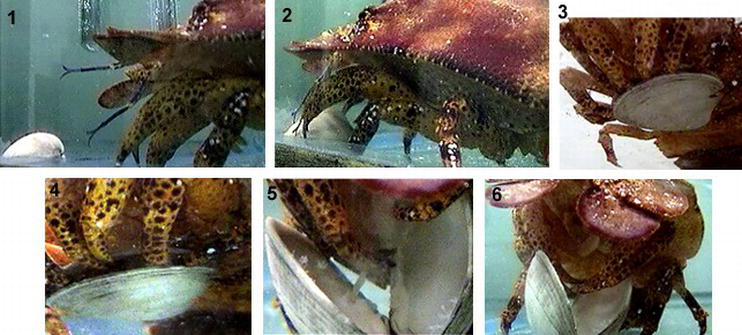
Although bivalves are a preferred food source, slipper lobsters have a varied diet, also consuming sea urchins, crustaceans, sponges, gastropods, barnacles, sea squirts, algae (Ulva spp.), and fish.

A study on the gut contents of commercially fished sleeper lobsters revealed that mollusks (27.7%) were the dominant prey, followed by bottom sediments (24.1%), fish (22.9%), crustaceans (10.7%), polychaetes (4.2%), and miscellaneous food items (10.4%).
Industry development

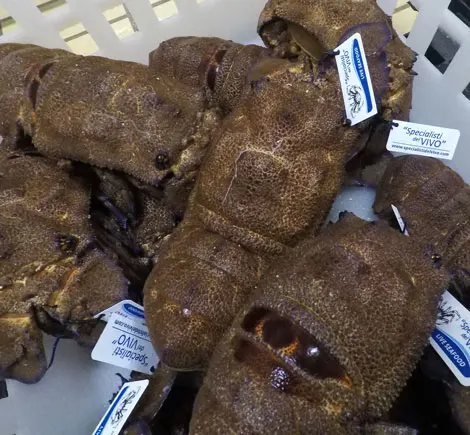
Slipper lobsters, which are priced between PHP 500 and PHP 700 per kilogram (USD $8 to $12 per kg), offer a more affordable alternative to spiny lobsters, which can reach prices of over PHP 1,500 (USD $26 per kg). The Mediterranean slipper lobster (Scyllarides latus), a closely related species, is valued at over $30 per kg in European markets. Given the successful breeding program implemented in the Philippines, researchers are now considering applying the same reproduction protocol to the Mediterranean species to explore its aquaculture potential.

This approach follows a similar path to spiny lobster aquaculture, which has successfully expanded from a small-scale fishery to a structured aquaculture industry. A key example is Panulirus homarus culture in Lombok, Indonesia, which grew into an industry valued at approximately $2 million in 2011. Initially based on the collection of wild seed lobsters, this sector evolved through structured nursery and grow-out systems, enabling sustainable farming practices.
By adopting a similar step-by-step approach, the slipper lobster aquaculture sector could follow the successful trajectory of spiny lobster farming, expanding from small-scale initiatives to commercial production. The Mediterranean slipper lobster, given its high market value and demand, presents a compelling candidate for aquaculture development, using proven hatchery and nursery techniques to establish a new sustainable seafood sector in the region.

Environmental aspects

It is crucial to consider that due to overfishing, driven in part by the increasing demand for high-value crustaceans, lobster stocks are experiencing significant depletion. Ensuring artificial reproduction is therefore essential not only for aquaculture development but also for the conservation and long-term sustainability of this valuable marine resource.

Aquaculture Moves Forward: Researchers Successfully Rear Slipper Lobster Larvae to Juveniles

Tags: Aquaculture Moves Forward: Researchers Successfully Rear Slipper Lobster Larvae to Juveniles
ShareShareTweetSend
Previous Post

Aquaculture and sustainability. New frontiers for feed

Next Post

Mena Project: Benghazi looks to the future

Orazio Albano

Orazio Albano

Independent consultant, in aquaculture and Blue Food value chain, with over 19 years of experience in technical support to cooperation projects, and consultancy to private companies, in Italy, Norwey, Ghana, Greece, Albania, Republic of Congo, Angola, Somalia, Tunisia, Turkey, Egypt, Morocco, Libya, Kenya. Co-founder of the Facebook group Coastal Community Network.

Related Posts

Tanzania Readies to Host COP12 for Protecting Marine and Coastal Ecosystems

Tanzania Readies to Host COP12 for Protecting Marine and Coastal Ecosystems

by Hadeer Amer Elkhouly
May 15, 2026

Tanzania Readies to Host COP12 for Protecting Marine and Coastal Ecosystems DAR ES SALAAM — Tanzania has secured the prestigious...

Hatchery, Nursery, and Grow-out Techniques for the Flathead Grey Mullet (Mugil cephalus): A Technical Roadmap for Sustainable Blue Transformation

Hatchery, Nursery, and Grow-out Techniques for the Flathead Grey Mullet (Mugil cephalus): A Technical Roadmap for Sustainable Blue Transformation

by Hadeer Amer Elkhouly
May 14, 2026

Hatchery, Nursery, and Grow-out Techniques for the Flathead Grey Mullet (Mugil cephalus): A Technical Roadmap for Sustainable Blue Transformation As...

Singing the sea: rhythm, labor and Identity among Senegal’s fishermen

Singing the sea: rhythm, labor and Identity among Senegal’s fishermen

by Orazio Albano
May 13, 2026

Never have I encountered a more powerful expression of the spirit of those who live the sea than in the...

A New Era for Egyptian Seafood: Egypt Gains First-Ever EU Approval for Farmed Fish Exports

A New Era for Egyptian Seafood: Egypt Gains First-Ever EU Approval for Farmed Fish Exports

by Editorial staff
May 12, 2026

A New Era for Egyptian Seafood: Egypt Gains First-Ever EU Approval for Farmed Fish Exports CAIRO, EGYPT – In a...

Next Post
Mena Project Benghazi looks to the future

Mena Project: Benghazi looks to the future

Leave a Reply Cancel reply

Your email address will not be published. Required fields are marked *

Categories


Newsletter

Blue Life Hub

The goal of Blue Life Hub is to inform and network between players in the Mediterranean and Africa, areas that have very important commonalities and shared interests.

Categories

  • Fishing
  • Aquaculture
  • Environment
  • Players
  • Innovation
  • Events

Follow us on:

Stock images by Depositphotos

  • WHO WE ARE
  • CONTACTS
  • PARTNERS
  • ADVERTISING
  • NEWSLETTER

© 2025 BLUE LIFE HUB. - P.Iva: 06325260823

Welcome Back!

Login to your account below

Forgotten Password?

Retrieve your password

Please enter your username or email address to reset your password.

Log In

Add New Playlist

Our Spring Sale Has Started

You can see how this popup was set up in our step-by-step guide: https://wppopupmaker.com/guides/auto-opening-announcement-popups/

No Result
View All Result
  • Home
  • News
  • Fishing
  • Aquaculture
  • Environment
  • Players
  • Innovation
  • Events
  • Integrated Activities
  • Who We Are
  • Contacts
  • Partners
  • Advertising
  • Newsletter

© 2025 BLUE LIFE HUB. - P.Iva: 06325260823