



• WHO WE ARE
  • CONTACTS
  • PARTNERS
  • ADVERTISING
  • NEWSLETTER
Tuesday, February 17, 2026
BlueLifeHub
  • Home
  • News
  • Fishing
  • Aquaculture
  • Environment
  • Players
  • Innovation
  • Events
  • Integrated Activities
No Result
View All Result
Blue Life Hub
  • Home
  • News
  • Fishing
  • Aquaculture
  • Environment
  • Players
  • Innovation
  • Events
  • Integrated Activities
No Result
View All Result
Blue Life Hub
No Result
View All Result
Home Aquaculture

Alternative nutrition in aquaculture requires a complementary approach

The study's main recommendations for the industry include optimising the management of existing resources to increase their productivity, greater emphasis on reuse and minimising waste, and exploring new resources that do not compete with human food production.

Editorial staff by Editorial staff
March 27, 2024
in Aquaculture, News
Reading Time: 2 mins read
0
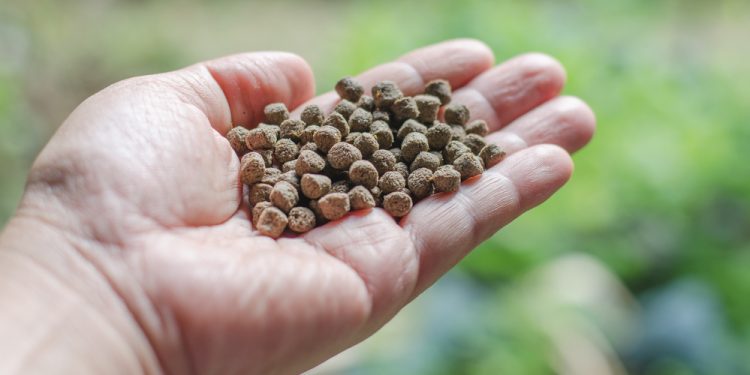
Alternative nutrition in aquaculture requires a complementary approach

Alternative nutrition in aquaculture requires a complementary approach

Alternative nutrition in aquaculture requires a complementary approach – A recent study published in the prestigious journal Reviews in Fisheries Science and Aquaculture highlights the challenge of finding alternative protein sources to reduce the dependence of aquatic nutrition on marine ingredients. The research, led by Dr. Brett Glencross, Technical Director of IFFO, the International Marine Ingredients Organisation, together with a team of researchers, explores a wide range of protein sources currently used in aquaculture feeds.

Options examined include traditional marine ingredients, processed animal proteins from by-products of human food production, insect and worm meal, single-celled proteins such as those obtained from bacteria and microalgae, and various plant-based sources such as cereals, oilseeds and legumes. The latter account for the bulk of global aquatic feed production and are used in both raw and processed form.

Dr. Glencross points out that the analysis shows that each ingredient has specific advantages and disadvantages. By identifying synergies between different ingredients, it is possible to discover opportunities for complementarities that could optimise the use of available resources. For example, while soybean offers advantages in terms of availability and consistency of quality, it may not be palatable for many aquatic species. In contrast, fishmeal, although available in limited quantities, is highly palatable and can be effectively combined with soybean to exploit their mutual strengths.

The study’s main recommendations for the industry include optimising the management of existing resources to increase their productivity, greater emphasis on reuse and minimising waste, and exploring new resources that do not compete with human food production.

A crucial aspect highlighted by Glencross is the importance of recognising the strengths and weaknesses of each ingredient to improve the adaptability and sustainability of the industry in the long term. Although technological advances have improved the ability to work with a wider variety of ingredients, the research emphasises that there is still much work to be done to develop alternative protein sources that can contribute significantly to aquatic nutrition.

In conclusion, the path towards an aquaculture industry less dependent on marine ingredients is complex and requires a holistic approach that considers the integration of different protein sources. The aquatic feed industry faces the challenge of balancing sustainability, availability and nutritional needs in an ever-changing environment, but research such as that conducted by Dr Glencross and his team provides valuable directions for the future.

Alternative nutrition in aquaculture requires a complementary approach

Tags: Alternative nutrition in aquaculture requires a complementary approachblue economyblue transformation
ShareShareTweetSend
Previous Post

Seaweed at the heart of a sustainable future

Next Post

The Italian component of Go Blue Programme in Kenya inaugurate small scale cassava processing plants in Kenya

Editorial staff

Editorial staff

Related Posts

African Leaders Convene in Addis Ababa for 39th AU Summit Focused on Water and Reform

African Leaders Convene in Addis Ababa for 39th AU Summit Focused on Water and Reform

by Hadeer Amer Elkhouly
February 16, 2026

African Leaders Convene in Addis Ababa for 39th AU Summit Focused on Water and Reform ADDIS ABABA – The 39th...

FAO Validates Regional Dashboard to Harmonize Agrifood Systems in the NENA Region

FAO Validates Regional Dashboard to Harmonize Agrifood Systems in the NENA Region

by Hadeer Amer Elkhouly
February 13, 2026

FAO Validates Regional Dashboard to Harmonize Agrifood Systems in the NENA Region CAIRO – The Food and Agriculture Organization of...

FAO Special Report: Addressing Global Fish Fraud and Supply Chain Integrity

FAO Special Report: Addressing Global Fish Fraud and Supply Chain Integrity

by Editorial staff
February 12, 2026

FAO Special Report: Addressing Global Fish Fraud and Supply Chain Integrity The Food and Agriculture Organization of the United Nations...

Aqaba to Host Landmark “ABOFA” Blue Economy and Dive Convention in 2026

Aqaba to Host Landmark “ABOFA” Blue Economy and Dive Convention in 2026

by Hadeer Amer Elkhouly
February 11, 2026

Aqaba to Host Landmark "ABOFA" Blue Economy and Dive Convention in 2026 AQABA, JORDAN – In a significant move to...

Next Post
The Italian component of Go Blue Programme in Kenya inaugurate small scale cassava processing plants in Kenya

The Italian component of Go Blue Programme in Kenya inaugurate small scale cassava processing plants in Kenya

Leave a Reply Cancel reply

Your email address will not be published. Required fields are marked *

Categories


Newsletter

Blue Life Hub

The goal of Blue Life Hub is to inform and network between players in the Mediterranean and Africa, areas that have very important commonalities and shared interests.

Categories

  • Fishing
  • Aquaculture
  • Environment
  • Players
  • Innovation
  • Events

Follow us on:

Stock images by Depositphotos

  • WHO WE ARE
  • CONTACTS
  • PARTNERS
  • ADVERTISING
  • NEWSLETTER

© 2025 BLUE LIFE HUB. - P.Iva: 06325260823

Welcome Back!

Login to your account below

Forgotten Password?

Retrieve your password

Please enter your username or email address to reset your password.

Log In

Add New Playlist

No Result
View All Result
  • Home
  • News
  • Fishing
  • Aquaculture
  • Environment
  • Players
  • Innovation
  • Events
  • Integrated Activities
  • Who We Are
  • Contacts
  • Partners
  • Advertising
  • Newsletter

© 2025 BLUE LIFE HUB. - P.Iva: 06325260823