

Turning an ocean invasive specie into opportunity: how Lionfish Caribbean is protecting coral reefs –
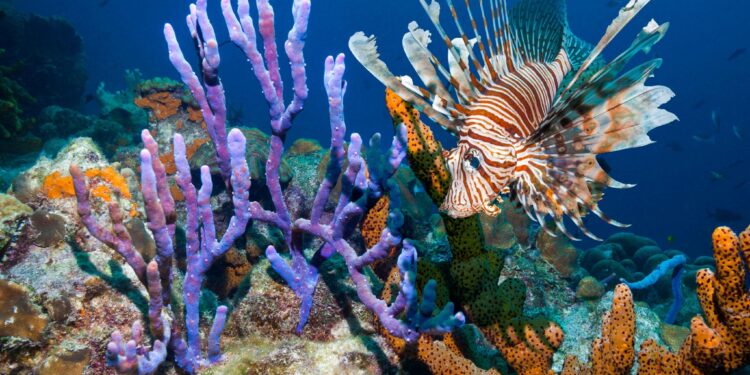
With its striking stripes, elegant fins and almost hypnotic movements, the lionfish is undoubtedly one of the ocean’s most fascinating creatures. Yet beneath its spectacular appearance lies a serious ecological threat.
Native to the Indo-Pacific region, invasive lionfish (Pterois volitans and Pterois miles) have established populations across the western Atlantic and Caribbean, where they prey on native fish and disrupt delicate reef ecosystems.
Their rapid reproduction, voracious appetite and limited natural predation in invaded habitats have made them a major challenge for marine conservation.
For Caribbean coral reefs, already under pressure from climate change, pollution and habitat degradation, the spread of lionfish represents another threat to biodiversity.
But what if this environmental problem could also become an economic opportunity?
In Curaçao, an innovative initiative called Lionfish Caribbean is demonstrating how targeted removal, entrepreneurship and community participation can work together to protect marine ecosystems.
From reef conservation to sustainable enterprise
Founded in 2010, Lionfish Caribbean began with a straightforward mission: reduce the impact of invasive lionfish on Curaçao’s coral reefs. lionfishcaribbean.com
Over time, the initiative developed into a broader model combining conservation, local employment, education and sustainable product development.
According to the organization, its network now includes more than 50 trained divers involved in removing invasive lionfish from Caribbean waters.
Rather than treating captured lionfish simply as waste, the initiative seeks to use different parts of the fish, creating economic value that helps support continued removal efforts.
The underlying idea is compelling: when removing an invasive species generates income, conservation activities may become more financially sustainable and create opportunities for local communities.
From invasive fish to sustainable seafood
One of Lionfish Caribbean’s most accessible innovations is culinary.
Although lionfish possess venomous spines, their properly prepared flesh is edible. Once handled and processed safely, lionfish can be transformed into a variety of seafood dishes.
At its restaurant in Curaçao, Lionfish Caribbean introduces visitors to this alternative seafood resource, connecting food experiences with marine conservation.
By encouraging demand for responsibly harvested invasive lionfish, the initiative aims to create additional incentives for their removal.
It is an example of how gastronomy can contribute to environmental awareness, helping consumers understand that their food choices may support specific conservation goals.
However, developing lionfish fisheries requires careful management. Localized harvesting can reduce lionfish densities, but commercial demand alone cannot guarantee ecosystem recovery.

Wearable conservation: jewelry with an environmental purpose
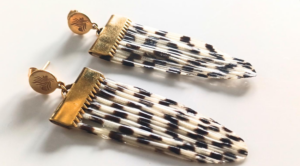
Perhaps the initiative’s most distinctive innovation is its collection of handcrafted jewelry made from lionfish fins.
The fish’s naturally patterned fins are carefully cleaned, preserved and incorporated into earrings, necklaces and bracelets.
Each piece is unique, reflecting the distinctive shapes and colors of the original fish.
The jewelry project began in 2016, when Lionfish Caribbean explored ways to increase the economic value of each captured lionfish.
Today, the collection represents a creative intersection between craftsmanship, marine conservation and the circular economy.
Instead of discarding usable materials, the initiative transforms them into products that can help finance further conservation activities.
These accessories also serve as conversation starters, encouraging people to learn about invasive species and the importance of healthy coral reefs.
A circular approach to the blue economy
The Lionfish Caribbean model reflects an increasingly important principle of the sustainable blue economy: environmental protection and economic activity need not be opposing forces.
Its activities bring together several complementary dimensions: targeted invasive-species management, sustainable seafood, artisanal production, environmental education and tourism experiences.
The organization has also explored producing accessories from lionfish skin, including leather-like materials combined with recycled wetsuit fabric.
This approach aims to extract greater value from each fish removed while minimizing unused materials.
Its significance extends beyond the products themselves. It illustrates how environmental challenges can inspire new business models rooted in local knowledge, creativity and ecological responsibility.
Community participation and environmental education
An essential element of Lionfish Caribbean’s approach is public engagement.
Through workshops, educational experiences and encounters with trained divers, visitors can learn about invasive lionfish and the ecological importance of coral reefs.
These activities help connect tourism with conservation, transforming a visitor experience into an opportunity for environmental learning.
The model also highlights the importance of community participation. Long-term invasive-species management depends on trained local people, consistent removal efforts and sustained financial support.
In this context, tourism, food and craft products can become complementary sources of income rather than isolated commercial activities.
A lesson for the future of ocean conservation
Lionfish Caribbean offers an example of how the blue economy can be approached through practical, locally driven innovation.
Its experience demonstrates that an invasive species can become the starting point for new economic activities that contribute to ecological management.
Yet the broader lesson is not that every marine environmental problem can be solved by creating a market.
Successful conservation still requires scientific monitoring, responsible practices and long-term ecological assessment. Removing lionfish is one part of protecting coral reefs, not a substitute for addressing climate change, pollution or habitat loss.
What makes the Lionfish Caribbean initiative noteworthy is its attempt to connect these different dimensions: protecting biodiversity, supporting livelihoods, encouraging responsible consumption and engaging the public.
At a time when ocean ecosystems face unprecedented pressures, such initiatives offer valuable inspiration for coastal communities seeking to combine environmental responsibility with economic resilience.
Turning an ocean invasive specie into opportunity: how Lionfish Caribbean is protecting coral reefs