

Advancing Sustainable Small-Scale Fisheries: From Global Commitments to Local Resilience
Small-scale fisheries are central to global food security, employment, nutrition and the social fabric of coastal and inland communities. Despite their scale and importance, they continue to face persistent challenges linked to climate change, ecosystem degradation, unequal access to resources, limited social protection and insufficient participation in fisheries governance.
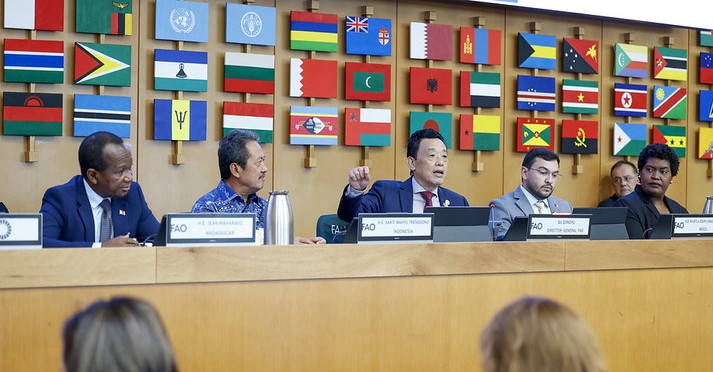
These issues were brought to the forefront during the 3rd Small-Scale Fisheries Summit, held from 4 to 6 September 2026 at the headquarters of the Food and Agriculture Organization of the United Nations (FAO) in Rome.
The Summit convened representatives of fishing communities, governments, Indigenous Peoples, civil society organizations, researchers and international institutions to examine how the sustainability and resilience of small-scale fisheries can be strengthened through more inclusive governance, improved policy implementation and greater recognition of the sector’s economic and social contribution.
Small-Scale Fisheries as a Pillar of Food Systems
The contribution of small-scale fisheries extends far beyond the volume of fish landed.
According to FAO, small-scale fisheries account for at least 40% of global capture fisheries production and represent approximately 90% of employment across capture fisheries value chains. Their importance is particularly significant in developing countries, where fisheries often provide essential sources of income, affordable animal protein and livelihood security.
For millions of households, fishing is not simply an economic activity. It is closely connected to local identity, traditional knowledge and long-standing relationships with aquatic ecosystems.
FAO Director-General QU Dongyu emphasized during the Summit that strengthening the sustainability of small-scale fisheries is closely linked to broader efforts to reduce poverty, improve food security and support sustainable development.
Moving from International Guidance to Practical Implementation
A major focus of the Summit was the continued implementation of the Voluntary Guidelines for Securing Sustainable Small-Scale Fisheries in the Context of Food Security and Poverty Eradication, commonly referred to as the SSF Guidelines.
Adopted in 2014, the Guidelines provide the first internationally agreed framework dedicated specifically to small-scale fisheries. They recognize that sustainability cannot be achieved through fisheries management measures alone and must also address human rights, decent work, gender equality, social development, tenure rights and meaningful participation in decision-making.
More than a decade after their adoption, the central challenge is now translating these principles into effective national and local action.
The development of National Plans of Action for Small-Scale Fisheries is increasingly viewed as an important mechanism for adapting the SSF Guidelines to national priorities and strengthening accountability.
Such plans can provide a structured pathway for governments to address issues including access to resources, market opportunities, social protection, climate resilience and participation of fishing communities in fisheries governance.

Strengthening Resilience in a Changing Climate
Small-scale fishing communities are among the groups most directly exposed to environmental change.
Climate variability, rising sea temperatures, habitat degradation, pollution, coastal erosion and shifts in fish distribution are already affecting fishing patterns and livelihood stability in many regions.
These pressures are further compounded by increasing competition for marine and coastal space from sectors such as tourism, shipping, energy infrastructure and coastal development.
For small-scale fishers, environmental degradation has immediate economic consequences. Changes in fish availability can reduce catches, increase operating costs and undermine the predictability on which household incomes depend.
Building resilience therefore requires a broader approach that combines fisheries management with ecosystem conservation, climate adaptation and livelihood diversification.
The protection and restoration of critical habitats—including mangroves, wetlands, seagrass meadows and spawning areas—can provide ecological benefits while also supporting fisheries productivity and community resilience.
An Inclusive Blue Economy Must Include Fishing Communities
The rapid expansion of the blue economy has created new opportunities in sectors such as renewable energy, marine biotechnology, digital technologies and sustainable tourism.
However, economic growth within marine and coastal areas must be accompanied by safeguards that ensure traditional resource users are not marginalized.
Small-scale fishing communities often operate with limited access to finance, infrastructure, technology and political representation. As competition for coastal and marine resources increases, their participation in planning and decision-making becomes increasingly important.
An inclusive blue economy should therefore recognize small-scale fishers not simply as beneficiaries of development, but as key stakeholders with legitimate rights, knowledge and economic contributions.
This requires stronger access to markets, financial services, modern infrastructure, training opportunities and transparent governance processes.
Valuing Local and Traditional Knowledge
The sustainability of fisheries management can also benefit from closer integration of scientific knowledge with the experience of fishing communities.
Fishers often possess detailed understanding of local ecosystems, including seasonal variations, species behaviour, habitat conditions and changes in resource availability.
While scientific monitoring remains essential, community knowledge can provide valuable insights that improve local fisheries management and strengthen the relevance of conservation measures.
Participatory research, community-based monitoring and collaborative data collection can help bridge the gap between formal science and knowledge generated through long-term interaction with aquatic ecosystems.
Such approaches can also build greater trust between fishing communities, researchers and public institutions.
Expanding Opportunities for Youth
The future of small-scale fisheries will also depend on whether younger generations see viable pathways within the sector.
In many fishing communities, young people face limited employment prospects, unstable incomes and increasing pressure to migrate toward urban areas or alternative sectors.
At the same time, younger generations bring skills that can support the modernization and diversification of fisheries value chains.
Opportunities are emerging in areas such as digital fisheries monitoring, seafood traceability, entrepreneurship, value-added processing, marine conservation, data analysis, marketing and sustainable aquaculture.
Meaningful youth engagement should therefore extend beyond encouraging young people to enter traditional fishing activities. It should support their participation as entrepreneurs, researchers, managers, innovators and policy professionals contributing to the wider fisheries and blue economy sectors.

Recognizing Women’s Contribution Across the Value Chain
Women are also fundamental to the functioning of small-scale fisheries, particularly in post-harvest activities such as processing, trading, marketing and distribution.
Yet their contribution is frequently underrepresented in official statistics and decision-making structures.
Strengthening small-scale fisheries requires greater recognition of women’s economic roles and improved access to finance, training, markets, infrastructure and leadership opportunities.
A more accurate understanding of fisheries value chains must therefore include the full range of activities that take place before and after fish are landed.
From International Dialogue to Local Impact
The timing of the 2026 Summit was significant, taking place immediately ahead of the 37th Session of the FAO Committee on Fisheries.
This created an important opportunity to bring the priorities of small-scale fishing communities into wider global fisheries policy discussions.
The Summit also reinforced a broader message: international commitments will only be meaningful if they lead to measurable improvements at community level.
Progress should ultimately be assessed through practical outcomes, including stronger participation of fishers in governance, improved livelihood security, better access to markets and services, healthier aquatic ecosystems and increased resilience to climate and economic shocks.
A Strategic Priority for Sustainable Fisheries
Small-scale fisheries should not be viewed as a marginal component of the global fisheries sector.
They are an essential part of food systems, local economies and coastal resilience, while also contributing significantly to employment and nutrition.
Ensuring their future will require coordinated action across fisheries management, social policy, climate adaptation, market development and community participation.
The 2026 Small-Scale Fisheries Summit provides renewed momentum for this agenda.
The next step is to ensure that the principles discussed at the global level are translated into policies, investments and institutional reforms that improve conditions for fishing communities in practice.
The sustainability of small-scale fisheries is ultimately inseparable from the sustainability of the communities, food systems and aquatic ecosystems that depend on them.