



• WHO WE ARE
  • CONTACTS
  • PARTNERS
  • ADVERTISING
  • NEWSLETTER
Tuesday, March 17, 2026
BlueLifeHub
  • Home
  • News
  • Fishing
  • Aquaculture
  • Environment
  • Players
  • Innovation
  • Events
  • Integrated Activities
No Result
View All Result
Blue Life Hub
  • Home
  • News
  • Fishing
  • Aquaculture
  • Environment
  • Players
  • Innovation
  • Events
  • Integrated Activities
No Result
View All Result
Blue Life Hub
No Result
View All Result
Home Environment

Brown algae sequester huge amounts of carbon

According to researchers at the Max Planck Institute for Marine Microbiology brown algae could remove up to 550 million tons of carbon dioxide from the atmosphere each year

Editorial staff by Editorial staff
January 5, 2023
in Environment, Innovation
Reading Time: 2 mins read
0
Brown algae sequester huge amounts of carbon

Brown algae sequester huge amounts of carbon

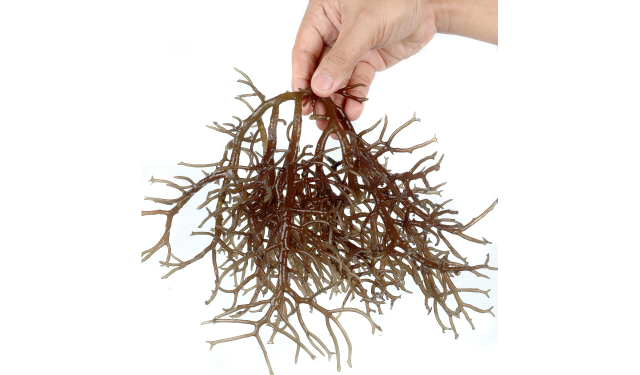
Brown algae sequester huge amounts of carbon – According to researchers at the Max Planck Institute for Marine Microbiology, brown algae such as fucus, could remove up to 550 million tons of carbon dioxide from the atmosphere each year.

These species absorb large amounts of carbon dioxide from the air and release parts of the carbon as mucus that is difficult for other ocean dwellers to break down, so, as the researchers say, the carbon is removed from the atmosphere for a long time.

In essence, brown algae absorb more carbon dioxide from the air than terrestrial forests.

The research whose lead author is Hagen Buck-Wiese of the Max Planck Institute for Marine Microbiology, shows that brown algae can remove large amounts of carbon dioxide in the long term and therefore can counteract global warming.

Algae absorb carbon dioxide from the atmosphere and use the carbon to grow. They release up to a third of the carbon they absorb into seawater, for example in the form of sugary excretions. Depending on the structure, the excretions are quickly used by other organisms or sink to the seabed.

The study highlights that the algal mucosa called fucoidan is particularly responsible for this carbon removal and estimates that brown algae could remove up to 550 million tons of carbon dioxide from the air each year, nearly the amount of the entire annual carbon emission. greenhouse of Germany.

In addition, fucoidan does not contain nutrients such as nitrogen, therefore, the growth of brown algae is not affected by carbon losses.

To conduct the study, Buck-Wiese and his colleagues from the MARUM MPG Bridge Group Marine Glycobiology, which is based at both the Max Planck-Institute Bremen and MARUM – Center for Marine and Environmental Sciences at the University of Bremen, conducted their experiments at the Tvärminne Zoological Station in southern Finland.

Brown algae sequester huge amounts of carbon

Tags: algaeblueeconomybluetrasformationbrown algaeenvirnmentmax plack universitymicrobiologysustainability
ShareShareTweetSend
Previous Post

Oman. Aquaculture production has increased by 500%

Next Post

The 6th edition of the Halieutis Fair

Editorial staff

Editorial staff

Related Posts

Goodbye plastic: a marine inspired biopolymer that grows stronger in water

Goodbye plastic: a marine inspired biopolymer that grows stronger in water

by Orazio Albano
February 27, 2026

Goodbye plastic: a marine-inspired biopolymer that grows stronger in water Plastic pollution remains one of the most pressing environmental challenges...

Reef Cub and the restoration of oyster reefs in the North Sea

Reef Cub and the restoration of oyster reefs in the North Sea

by Orazio Albano
January 20, 2026

Reef Cub and the restoration of oyster reefs in the North Sea In the North Sea, a pioneering restoration initiative...

Alioune Diagne and the sea that watches us

Alioune Diagne and the sea that watches us

by Orazio Albano
January 17, 2026

Alioune Diagne and the sea that watches us - At Blue Life Hub, we work to make society understand how...

Mediterranean Great Whites Racing Against Extinction

Mediterranean Great Whites Racing Against Extinction

by Douniazad Abbani
January 13, 2026

Mediterranean Great Whites Racing Against Extinction Despite international legal protections, great white sharks in the Mediterranean are declining at an...

Next Post
The 6th edition of the Halieutis Fair

The 6th edition of the Halieutis Fair

Leave a Reply Cancel reply

Your email address will not be published. Required fields are marked *

Categories


Newsletter

Blue Life Hub

The goal of Blue Life Hub is to inform and network between players in the Mediterranean and Africa, areas that have very important commonalities and shared interests.

Categories

  • Fishing
  • Aquaculture
  • Environment
  • Players
  • Innovation
  • Events

Follow us on:

Stock images by Depositphotos

  • WHO WE ARE
  • CONTACTS
  • PARTNERS
  • ADVERTISING
  • NEWSLETTER

© 2025 BLUE LIFE HUB. - P.Iva: 06325260823

Welcome Back!

Login to your account below

Forgotten Password?

Retrieve your password

Please enter your username or email address to reset your password.

Log In

Add New Playlist

Our Spring Sale Has Started

You can see how this popup was set up in our step-by-step guide: https://wppopupmaker.com/guides/auto-opening-announcement-popups/

No Result
View All Result
  • Home
  • News
  • Fishing
  • Aquaculture
  • Environment
  • Players
  • Innovation
  • Events
  • Integrated Activities
  • Who We Are
  • Contacts
  • Partners
  • Advertising
  • Newsletter

© 2025 BLUE LIFE HUB. - P.Iva: 06325260823