


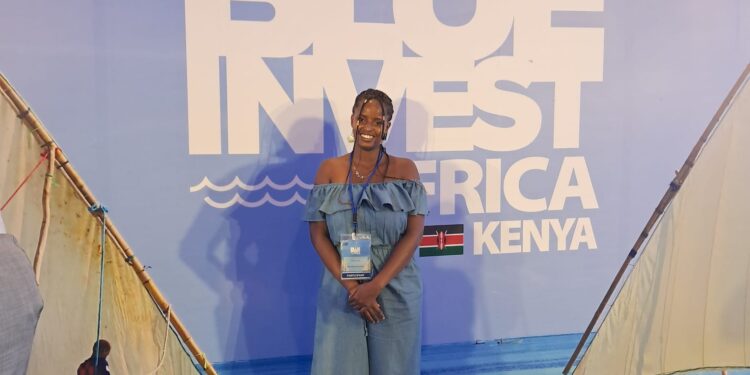
Muna Jamal’s Path from Café Owner to Blue Economy Innovator_ The Blue Economy is transforming Africa’s coastal communities, creating opportunities for sustainable growth and livelihoods. Among those driving this change is Muna Jamal, whose journey from running a small café in Nairobi to working with MarineCatch Africa shows how determination, curiosity, and entrepreneurship can make a real impact on people and the ocean alike.
Background and Early Inspiration
Muna Jamal was born and raised in Nairobi, the last born of five children, with three brothers and one sister. She graduated with a diploma in International Relations and Diplomacy from Riara University, but she did not pursue that career path. From a very young age, Muna was more of an entrepreneur. She worked as a cashier at a supermarket franchise known as Uchumi Supermarket in Nairobi West before even graduating. Later, she worked as a sales representative for Greatlakes Ltd, a sweets and beverage company. Eventually, she decided to leave employment to try running her own businesses, including selling flower pots she made herself, selling second-hand clothes with a university friend, and finally opening her own café for two years in partnership with her sister at Discount Market, Nairobi West.
Through these ventures, it was clear that Muna was more inclined toward the business world. This entrepreneurial experience ultimately led her to MarineCatch Africa, where she started as a social media handler and gradually grew into her current role of business developer and market expansion.

A Lifelong Fascination with the Ocean
Muna’s initial interest in the Blue Economy was sparked by her interactions with the ocean and people already in the sector. Up until the age of 22, she had never seen the ocean. She had heard stories from people and watched videos, dreaming of experiencing the beach and swimming in the ocean. To fulfill this dream, she worked jobs to save up for a trip with her sisters and a friend to Kilifi. She recalls that one of the best days of her life was arriving straight from the bus stop at the beach at sunrise. The beauty she witnessed in that moment left a lasting impression on her, and the feeling remains indescribable.
Years later, with more interactions with the ocean, Muna, who now owned her small café, met Mr. Kennedy Kitavi, founder of MarineCatch Africa. He became one of her biggest customers and a close friend. Their collaboration led to the idea of opening a Swahili and seafood restaurant. Mr. Kennedy noticed Muna’s eagerness to learn more about MarineCatch Africa, as she constantly asked questions. Through these interactions, she realized there was more to the ocean than the picture-perfect scene she had seen in Kilifi. She began learning about its impact, not just on the planet, but as a livelihood for families and communities. She discovered that the ocean offers more than fish; it provides other valuable marine products that can be processed and sold.
Muna also learned about the significant roles women play in the Blue Economy, which she had previously thought was male-dominated. She became fascinated by topics like the gravitational pull of the moon, the changing tides, and seafood migration. When Mr. Kennedy offered her an opportunity to join MarineCatch Africa, she was initially scared but eager to explore the ocean, which she learned had a whole economy of its own. She moved from Nairobi, the only place she knew as home, to Kwale to pursue this path, and she wouldn’t choose to be anywhere else.
Lessons from Entrepreneurship
Muna’s entrepreneurial journey, especially running her café, taught her lessons that continue to influence her work at MarineCatch Africa. She notes that the lessons came not only from the café but from every small business and job she had tried prior.
The biggest lesson from her café experience was patience. Growing up, her siblings would jokingly blame this on her being the youngest, as she often got her way. Running and maintaining the café required endurance, helping her face challenges and make difficult decisions. It built her emotional stability during hard times and taught her resilience to learn from failures and adapt when the business developed slowly until it became sustainable.
Through patience, she also learned customer relations, gaining a better understanding of her customers’ needs, which resulted in repeat clients. These lessons now guide her work at MarineCatch Africa.
She explains that when dealing with the ocean, patience is crucial, as it is seasonal and influenced by wind, weather patterns, and currents—factors beyond human control. Unlike businesses where you can purchase and resell products, the ocean requires an adaptive and patient approach.
Although the Blue Economy is becoming more inclusive for women, it remains challenging for a young woman like Muna exploring new markets in a male-dominated field. Success requires confidence, persistence, and applying all her sales skills to stand her ground and dominate.
Regarding sustainable practices, Muna sometimes feels she doesn’t know enough. Yet patience, resilience, and an open mind motivate her to take more classes, learn continuously, and embrace new challenges and ideas.

Joining MarineCatch Africa
Muna chose to study International Relations and Diplomacy to work closely with communities, initially aiming to major in International Organizations or Humanitarian Aid, which would allow her to support communities and people in need. MarineCatch Africa provided a unique opportunity to embrace both her passions: working with communities and learning about the ocean.
Curious about the ocean and its importance to human life, Muna wanted to understand fishing communities and their role in food security. MarineCatch Africa empowers these communities using technological tools like Blockchain and IoT, enabling small-scale fishermen to sell directly to buyers for better prices while conserving the ocean through sustainable practices.
Balancing Sustainability and Community Support
Muna emphasizes that sustainability cannot be imposed. MarineCatch Africa uses a collaborative approach, understanding the struggles and needs of fishing communities. Sustainability is framed as a pathway to better outcomes, such as accessing premium markets through local eco-labeling. Traditional knowledge is merged with digital tools, coaching fishermen on the correct fishing gear, methods for different species, and reporting catches to authorities.
Challenges in Implementing Sustainable Solutions
Muna highlights low digital literacy as a major challenge, particularly among the older generation of fishermen, who are unfamiliar with technology. Poor internet connectivity and skepticism also pose obstacles, as many fishermen see sustainability as a barrier rather than a benefit. MarineCatch Africa addresses these challenges through education, dialogue, and tangible results, such as higher earnings from traceable products.
Vision for the Future
Muna envisions MarineCatch Africa becoming the leading marketplace for sustainable seafood in Africa, empowering thousands of small-scale fishermen and setting benchmarks for transparency and responsibility. She sees herself as a key figure in building trust in the brand, expanding market reach beyond Africa, and ensuring that the story resonates with local communities, businesses, and international buyers who care about the origins of their seafood.
Measuring Success
For Muna, success is measured through impact:
-
Improved livelihoods and earnings for fishermen
-
Lifestyle changes and rural development
-
Inclusion of women and youth in the value chain
-
Improved stock management and reduced waste
A thriving ocean and empowered communities are her ultimate indicators of achievement.
Sales, Marketing, and Stakeholder Engagement
Muna uses storytelling to engage stakeholders, humanizing fisherfolk and their stories. Buyers understand that every fish purchased supports a family and sustains an ecosystem. She couples storytelling with data, traceability, and transparency, fostering loyalty and trust that traditional marketing cannot achieve.
Motivation and Resilience
Muna is motivated by the interest in and adoption of digital tools and education on sustainability. She believes sustainable practices are essential to conserving fisheries and ocean ecosystems. She wants to be part of a generation that leaves the ocean healthier than it was when we found it. Setbacks are inevitable, but she treats them as learning opportunities, pausing to reflect, realigning, and relying on her team for support.
Advice to Young Professionals and Women
First, believe that your voice matters; women bring unique perspectives to industries like the Blue Economy that have been male-dominated for decades. Second, seek knowledge and networks, because collaboration accelerates impact. Finally, stay grounded in Purpose. If you lead with values and passion, opportunities will follow, even in challenging Environments.
Muna Jamal’s journey reflects the power of resilience and reinvention. From running a small café in Nairobi to playing a central role in Africa’s Blue Economy, she has built a career that blends entrepreneurship with sustainability. Today, through her work at MarineCatch Africa, she supports fishing communities, promotes responsible seafood markets, and highlights the vital role of women in shaping a more inclusive and sustainable ocean economy.
Muna Jamal’s Path from Café Owner to Blue Economy Innovator