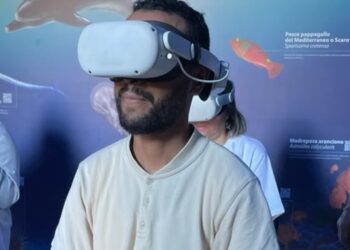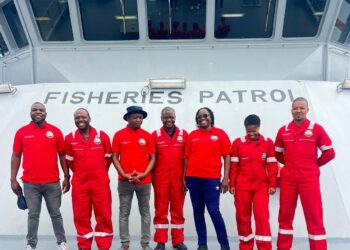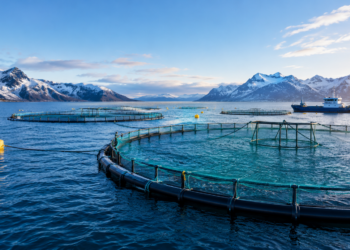


BÚRIA: where local seafood meets the next generation – The activity is an example of how fishing can be connected with food, tourism and local experiences. Rather than seeing seafood only as a product, visitors can also discover the people, places and traditions behind it. But during the event, one person in particular caught my attention: Vanessa, a 17-year-old girl who was helping her mother, who was taking part in the event.
Vanessa and a Different Kind of Learning
Vanessa was not there as a formal participant or as part of a professional programme. She was simply helping her mother. But when we spoke, she told me that she liked what she was doing.
That small conversation stayed with me. Young people are often described as the future of the marine sector. But before they become the people making decisions about the sea, fisheries or coastal communities, they need opportunities to know and experience these activities.
For Vanessa, it was a simple experience: helping her mother, meeting people and being part of an event connected with local seafood. For someone looking from the outside, it was also a reminder that knowledge about the sea does not always begin in a classroom.

Why These Experiences Matter
The marine environment is changing, and coastal communities are already adapting to changes in species, fisheries and food systems.
The next generation will live with many of these changes. Understanding the sea therefore means more than knowing that fish come from it. It means understanding the relationship between marine resources, local livelihoods, food, culture and the communities that depend on them. This kind of understanding can develop through education, but also through everyday experiences. A young person helping a parent at a local seafood event may seem like a small thing. But it can be an opportunity to discover a profession, a tradition, a local product or simply a different relationship with the sea.

From One Generation to Another
What I found interesting about Vanessa’s presence was not that she was already working in the seafood sector. It was that she was curious enough to take part and that she enjoyed the experience.
This is one of the less visible sides of local seafood events. They are not only spaces for producers to present their products or for visitors to taste local dishes. They can also become places where knowledge and experience move between generations.
BÚRIA’s participation brought together fishing, local food and tourism. Vanessa’s presence added another element to that picture: the possibility of passing this connection to the next generation.
And perhaps this is one of the simplest ways to keep local knowledge alive by giving young people a reason to be there, participate and discover it for themselves.
BÚRIA: where local seafood meets the next generation